

-
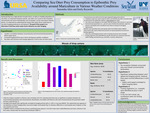
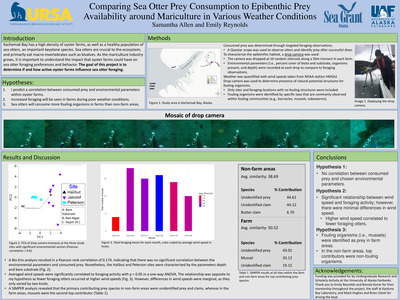
Comparing Sea Otter Prey Consumption to Epibenthic Prey Availability around Mariculture in Various Weather Conditions
Samantha Allen and Emily Reynolds
To determine if oyster farms influence sea otter foraging, I compared environmental parameters to prey in three oyster farms. I also looked at whether sea otters used oyster farms as opportunistic foraging areas during poor weather conditions and compared the abundance of consumed fouling organisms in farm and non-farm areas.
-

Fairbanks North Star Borough School District Music Outreach with UAF Music
Steven Anderson, Mari Ana Beks, Olivia Buzby, Alexia Devine, Grace Farrell, Ellie Martinson, Lucy McWilliams, and Jaunelle Celaire
Our Opera Workshop class performed an Outreach tour to high schools in this area, including West Valley, North Pole, and Lathrop High Schools.
-
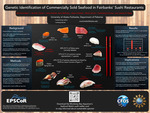
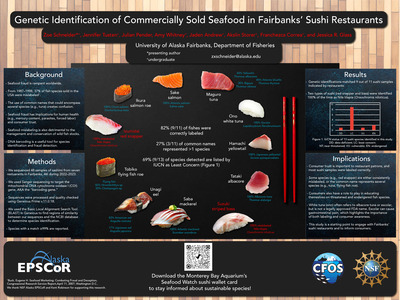
Genetic Identification of Commercially Sold Seafood in Fairbanks’ Sushi Restaurants
Jaden Andrew, Zoe Schneider, Askiin Storer, Jennifer Tusten, and Jessica Glass
To determine the truthfulness of seafood in Fairbanks, we sequenced various types of sushi from different sushi restaurants with Sanger sequencing to target the COI gene and compare it with the NCBI database to find regions of similarity.
-
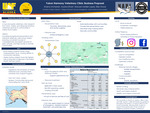
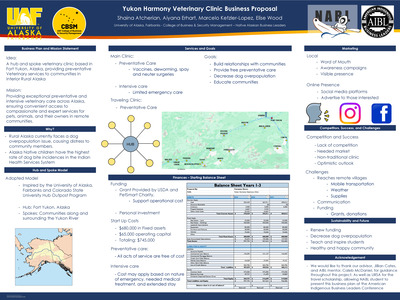
Yukon Harmony Veterinary Clinic Business Proposal
Shaina Atcherian, Aiyana Erhart, Marcelo Ketzler-Lopez, Elise Wood, and Jillian Bjornstad
A hub and spoke veterinary clinic based in Fort Yukon, Alaska, that would provide preventative Veterinary services to communities in Interior Rural Alaska at no cost.
-
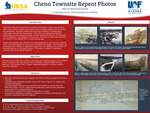
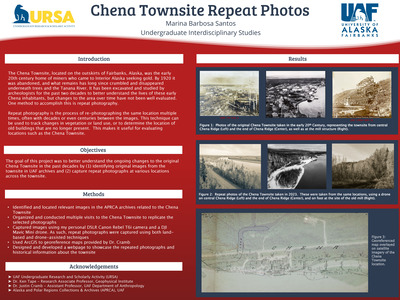
Chena Townsite Repeat Photos
Marina Barbosa Santos, Justin Cramb, and Ken Tape
This project utilizes repeat photography to support archeological efforts at the Chena Townsite, and to understand how the landscape has evolved since the town was abandoned. The project endeavors to contribute to the preservation of history, public education, and our understanding of land use changes.
-
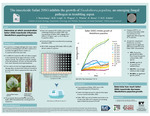
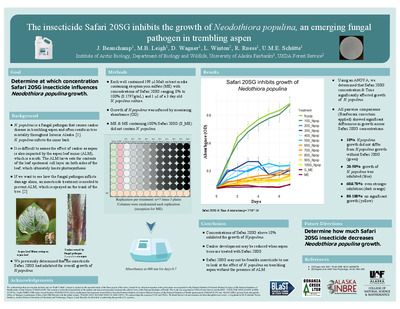
The insecticide Safari 20SG inhibits the growth of Neodothiora populina, an emerging fungal pathogen in trembling aspen
Josephine Beauchamp, Schuette Ursel, Mary Beth Leigh, Diane Wagner, and L Winton
Testing at which concentration the insecticide Safari 20SG insecticide inhibits the growth fungal pathogen Neodothiora populina.
-
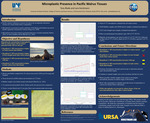
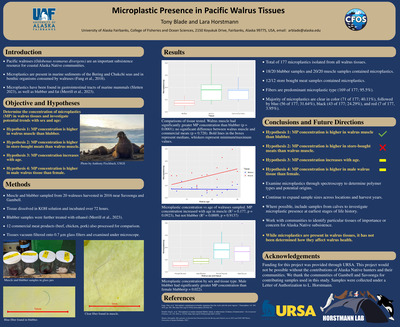
Microplastic Presence in Pacific Walrus Tissues
Tony Blade
Examined microplastic presence in Pacific walrus muscle and blubber, as well as trends in age and sex.
-
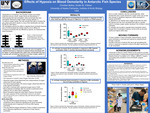
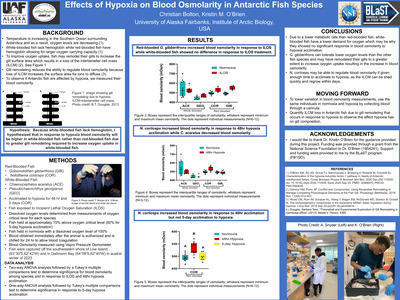
Effects of Hypoxia on Blood Osmolarity in Antarctic Fish Species
Christian Bolton and Kristin O'Brien
Temperature is increasing in the Southern Ocean surrounding Antarctica and as a result, oxygen levels are also decreasing, potentially affecting native fish species. I am measuring blood osmolarity to determine if hypoxia affects the ability of Antarctic fish to regulate blood osmolarity.
-
Notre Dame Cathedral (ノートルダム大聖堂)
Chel Boue
Japanese Language Speech Notre Dame Cathedral (ノートルダム大聖堂)
-
Japanese and Computer (日本語とコンピューター)
Gavin Brennan
Japanese Language Speech Japanese and Computer (日本語とコンピューター)
-
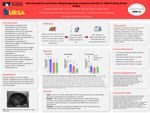
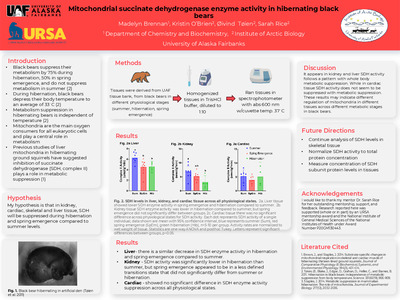
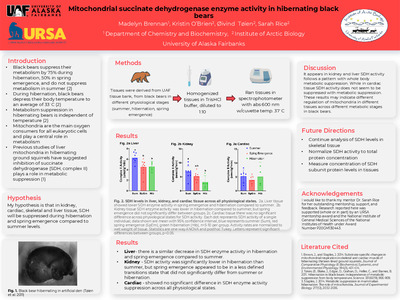
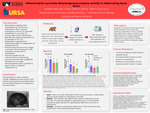
Mitochondrial succinate dehydrogenase enzyme activity in hibernating black bears
Madelyn Brennan and Sarah Rice
Studying mitochondrial succinate dehydrogenase enzyme activity in hibernating black bears in liver, cardiac and kidney tissue.
-
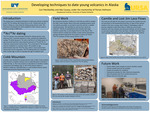
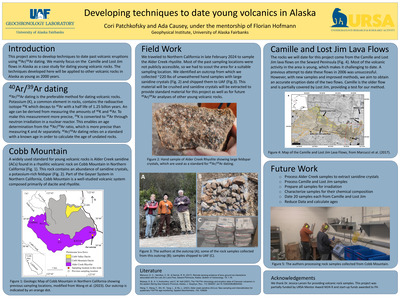
Developing techniques to date young volcanics in Alaska
Ada Causey, Cori Patchkofsky, and Florian Hofmann
Determining the timing of past eruptions is a crucial aspect of studying volcanic activity. This project aims to develop techniques to date past eruptions using 40Ar/39Ar dating of the Camille and Lost Jim flows in Alaska via the use of a mass spectrometer.
-
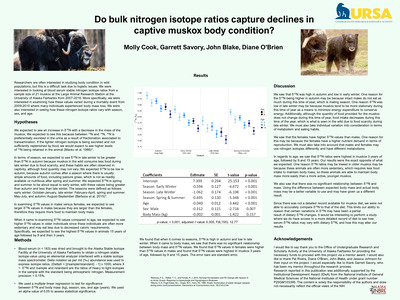
Do bulk nitrogen isotope ratios capture declines in captive muskox body condition?
Molly Cook and Garrett Savory
We were interested in studying muskox bulk nitrogen isotope ratios to see if these values capture declines in body condition. We were particularly interested in using archived serum from muskox at the University of Alaska Fairbanks Large Animal Research Station from 2009-2010 when there was a decline in the body condition of some individuals due to deficiency in trace minerals. Nitrogen isotope ratios can be analyzed to assess protein balance in animals. Since the lighter isotope of nitrogen (14N) is preferentially excreted in urine, the heavier isotope of nitrogen (15N) is enriched in tissues. As a result, we expect to see a decrease in N15 ratios when an animal is in a state of emaciation.
-
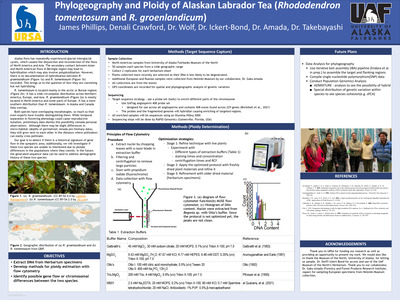
Phylogeography and Ploidy of Alaskan Labrador Tea (Rhododendron tomentosum and R. groenlandicum)
Denali Crawford, James Phillips, and Naoki Takebayashi
Our goal is to detect if there is a historical signature of gene flow in the sympatric area. Additionally, we will investigate if these two species are unable to interbreed due to ploidal differences in the populations where they coexist. In the future, the generated sequence data can be used to address demographic history of Rhododendron tomentosum and R. groenlandicum.
-
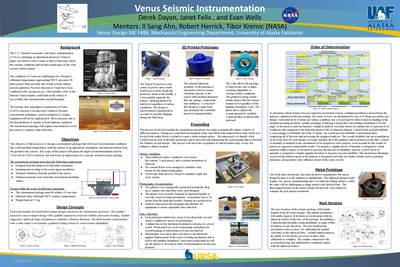
Venus Seismic Instrumentation
Derek Dayan, Janet Felix, Evan Wells, Il-Sang Ahn, and Robert Herrick
The project is to design, fabricate, and test a seismometer package that will be deployed on Venus by NASA. The optimal size, shape, mechanism, and weight of the package, including the windshield, will be investigated with the guidance of mentors at UAF and the NASA Glenn Research Center.
-
Cognitive Cryogenics: Visual Metaphors for Human-Environment Relationships
Reily Dixon and Sasha Bitzer
Cognitive Cryogenics: Visual Metaphors for Human-Environment Relationships focuses on gathering information on Alaskan glaciers, and the tendencies of local people to create a visual metaphor between the land and its inhabitants. This project highlights analogies which allow the audience to experience greater awareness and understanding of relationships to their environment.
-
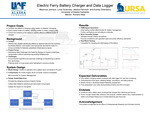
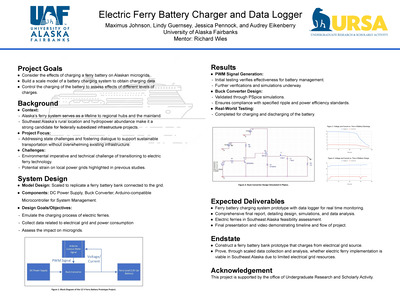
Electric Ferry Battery Charger and Data Logger
Audrey Eikenberry, Lindy Guernsey, Maximus Johnson, Jessica Pennock, and Richard W. Wies
JPEG Engineering’s Electric Ferry Battery Charger and Data Logger project aims to devise a viable solution for Southeast Alaska's delicate and limited-capacity electrical grids to accommodate the power demands of electric ferries. The project's design topology is centered on decomposing the electric ferry charging system into core components—control system, data logger, buck converter, and prefabricated elements with the purpose of demonstrating if small communities could support electric ferry loads using existing energy resources.
-
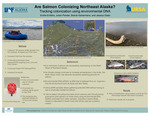
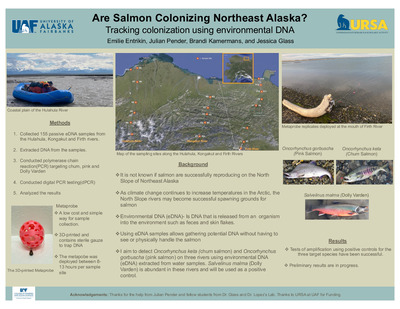
Are Salmon Colonizing Northeast Alaska?
Emilie Entrikin and Jessica Glass
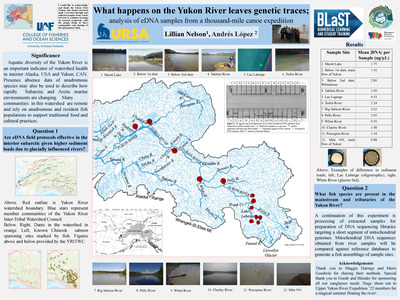
I collected 132 passive eDNA samples from three Arctic rivers in the summer of 2023 in hopes to track the colonization of salmon in Northeast Alaska. I have been working in the lab with PCR and dPCR to find traces of chum and pink salmon and using the Dolly Varden as a test control.
-
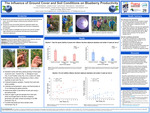
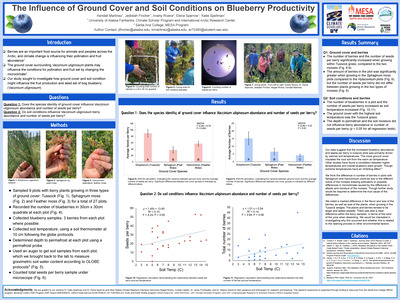
The Influence of Ground Cover and Soil Conditions on Blueberry Productivity
Jedidiah Fincher, Kendall Martinez, and Katie Spellman
A study of the effects of ground cover and soil conditions on Blueberry productivity at Bonanza Creek Long Term Ecological Research Station.
-
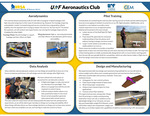
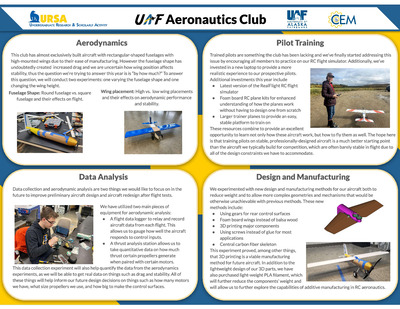
Aeronautics Club Aircraft Design Research
Kathryn Finley, Casey Lambries, Wyatt Richards, Micah VanderHart, and Michael Craig Hatfield
The UAF Aeronautics club designed and constructed a variety of different aircraft configurations. These aircraft were tested and analyzed to determine the various effects on aircraft performance and efficiency. The results were documented thoroughly for future iterations of the club to reference and utilize.
-
H&H Exhibition: Bunnyson (2024)
Marina Gonzalez Mazo and Miho Aoki
Bunnyson is a charm worn as a necklace or an insignia. It is crafted in 14k gold and holds a 0.35 ct diamond with grey coloration and a pearl cut. The jewel was designed in Blender, a free and open-source software. I then printed the sculpture with the help of the 3D printers in the UAF Makers Space, using Polycast filament. A new plastic filament designed to burn without residue was meant to replace wax in the traditional casting process. I created my 14k gold alloy by mixing gold with copper, following the old Spanish jewelry tradition. This gives the gold a slight pinkish hue. The design features two bunnies facing each other, holding the diamond together with their paws. They sit on top of a heart shape and have wings on the side. I wanted the jewel to look like a coat of arms inspired by royal and religious insignias. A symbol of status and wealth. It is a soft and whimsical design, almost like it was from a fairytale. The rabbits make a consistent apparition in my BFA thesis show as I use them as a euphemism for sexuality and devotion. With this piece, I wanted to create an heirloom jewel that would hold my BFA show in a nutshell, a insignia for reaching my commencement as a professional artist.
-
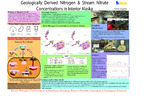
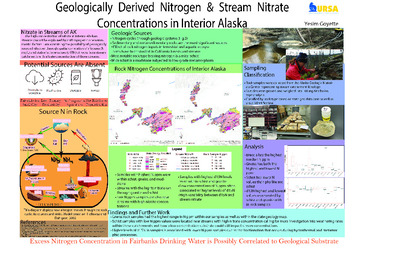
The Influence of Geologically Derived Nitrogen on Stream Nitrate Concentrations in Interior Alaska
Yesim Goyette, Sean Regan, and Tamara Harms
The high concentration of nitrate in Fairbanks drinking water cannot be explained by anthropogenic or environmental factors. I am examining the possibility of geologically sourced nitrogen through analysis of nitrogen content and isotopic composition in rock and how it spatially correlates to stream nitrate concentrations.
-
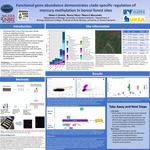
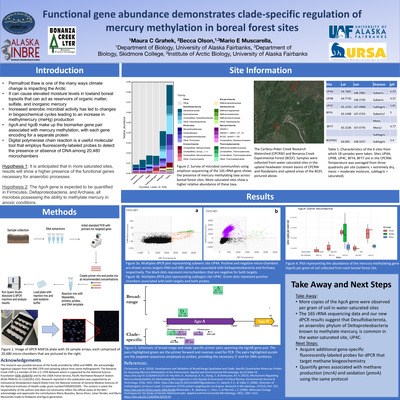
Functional Gene Abundance among Boreal Forest Sites
Maura Grahek and Mario Muscarella
I will be measuring the abundance of functional genes associated with the microbial production of methane and carbon dioxide. Digital polymerase chain reaction will be utilized to obtain complete quantification of these genes.
-
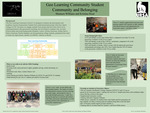
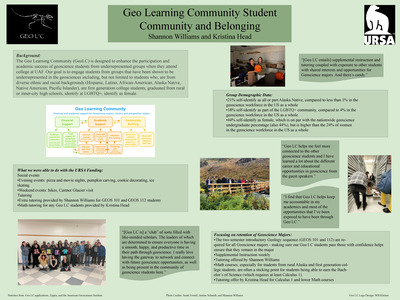
Geo Learning Community: Student Community and Belonging
Kristina Head, Shannon Williams, and Justine Schmidt
The Geo Learning Community (Geo LC) provides support for geoscience majors who are from typically underrepresented groups in STEM education. We support these students by offering tutoring, contact with faculty and opportunities at UAF, and social activities that provide a chance for students to build community outside of the classroom.
-
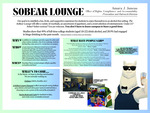
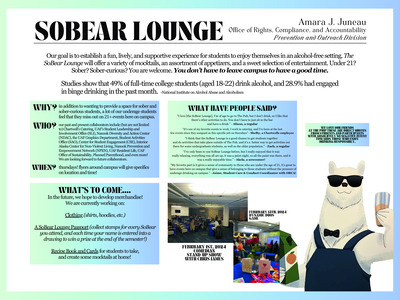
SoBear Lounge
Amara Juneau and Julia Aikman
An insight into ORCA's Thursday Event Series, the SoBear Lounge. NDAC and then ORCA POD (Prevention & Outreach Division) created the SoBear Lounge to provide a safe and brave space for UAF students under 21, students in recovery, students who are sober curious and students, staff and faculty who need a healthy and inclusive space to relax, receive health and wellness tips and to cultivate a community full of belonging, inclusivity, equality, fun, entertainment and free food and drink.
Printing is not supported at the primary Gallery Thumbnail page. Please first navigate to a specific Image before printing.