-
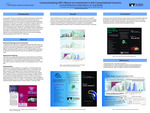
Communicating UAF's Return on Investment in the Computational Sciences
Anne Bartholomew
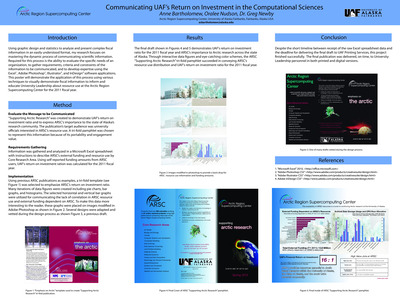
Using graphic design and statistics to analyze and present complex fiscal information in an easily understood format, my research focuses on mastering the dynamic process of communicating scientifi c information. Required for this process is the ability to evaluate the specifi c needs of an organization, to gather requirements, criteria and constraints of the information to be communicated, and to develop expertise using the Excel, Adobe Photoshop, Illustrator, and InDesign software applications. This poster will demonstrate the application of this process using various techniques to visually demonstrate fi scal information to inform and educate University Leadership about resource use at the Arctic Region Supercomputing Center for the 2011 fiscal year.
-
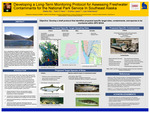
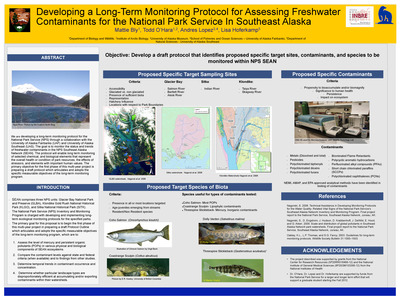
Developing a Long-Term Monitoring Protocol for Assessing Freshwater Contaminants for the National Park Service in Southeast Alaska
Mattie Bly
We are developing a long-term monitoring protocol for the National Park Service (NPS) through a collaboration with the University of Alaska Fairbanks (UAF) and University of Alaska Southeast (UAS). The goal is to monitor the status and trends of freshwater contaminants in the NPS Southeast Alaska Network (SEAN). The protocol will enable long term monitoring of selected chemical, and biological elements that represent the overall health or condition of park resources, the effects of stressors, and elements with important human values. The primary objective for the first phase of this multi-year project is preparing a draft protocol which articulates and adopts the specific measurable objectives of the long-term monitoring program.
-
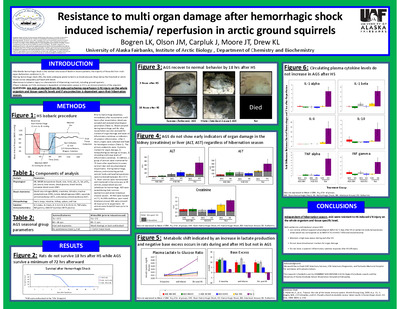
Resistance to multi organ damage after hemorrhagic shock induced ischemia/reperfusion in arctic ground squirrels
Lori Bogren, JM Olson, J Carpluk, JT Moore, and KL Drew
•Worldwide hemorrhagic shock is the number one cause of death in trauma patients, the majority of those die from multi organ dysfunction syndrome [1, 2]. •During hemorrhagic shock (HS), the body undergoes global ischemia as blood pressure drops below the threshold at which tissues can be adequately perfused with blood. •Resistance to ischemic injury is a characteristic of hibernating mammals, including ground squirrels. •There is debate on if this resistance is dependant on hibernation season or if it is an intrinsic plasticity of the organism. QUESTION: Are AGS protected from HS‐induced ischemia reperfusion (I/R) injury on the whole organism and tissue–specific levels and if any protection is dependent upon their hibernation season.
-
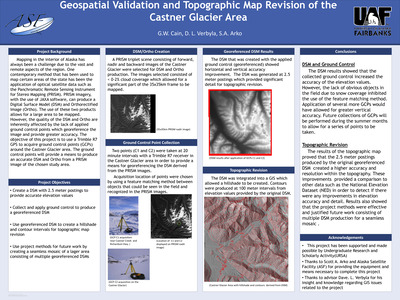
Geospatial Validation and Topographic Map Revision of the Castner Glacier Area
Grant Cain
Mapping in the interior of Alaska has always been a challenge due to the vast and remote aspects of the region. One contemporary method that has been used to map certain areas of the state has been the application of optical satellite data such as the Panchromatic Remote Sensing Instrument for Stereo Mapping (PRISM). PRISM imagery, with the use of JAXA software, can produce a Digital Surface Model (DSM) and Orthorectified Image (Ortho). The use of these two products allows for a large area to be mapped. However, the quality of the DSM and Ortho are inherently affected by the lack of applied ground control points which georeference the image and provide greater accuracy. The objective of this project is to use a Trimble R7 GPS to acquire ground control points (GCPs) around the Castner Glacier area. The ground control points will provide a means to produce an accurate DSM and Ortho from a PRISM image of the chosen study area.
-
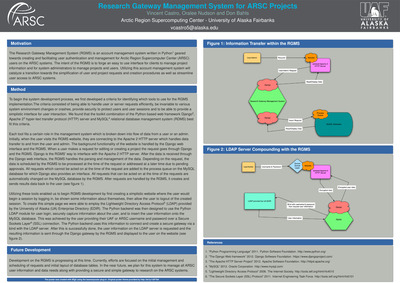
Research Gateway Management System for ARSC Projects
Vincent Castro
The Research Gateway Management System (RGMS) is an account management system written in Python1 geared towards creating and facilitating user authentication and management for Arctic Region Supercomputer Center (ARSC) users on the ARSC systems. The intent of the RGMS is to forge an easy to use interface for clients to manage project information and for system administrators to manage projects and users. Utilizing this account management system will catalyze a transition towards the simplification of user and project requests and creation procedures as well as streamline user access to ARSC systems.
-
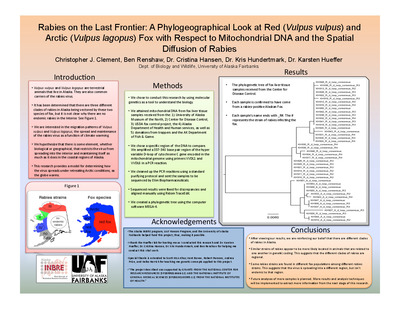
Rabies on the Last Frontier: A Phylogeographical Look at Red (Vulpus vulpus) and Arctic (Vulpus lagopus) Fox with Respect to Mitochondrial DNA and the Spatial Diffusion of Rabies
Christopher J. Clement
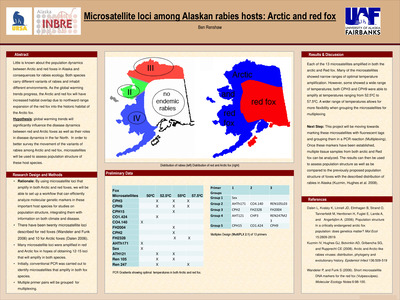
Vulpus vulpus and Vulpus lagopus are terrestrial animals that live in Alaska. They are also common carriers of the rabies virus. It has been determined that there are three different clades of rabies in Alaska being vectored by these two species of fox, but it is not clear why there are no endemic rabies in the Interior. We are interested in the migration patterns of Vulpus vulpus and Vulpus lagopus, the spread and maintenance of the rabies virus as a function of climate warming. We hypothesize that there is some element, whether biological or geographical, that restricts the virus from spreading into the interior and maintaining itself as much as it does in the coastal regions of Alaska. This research provides a model for determining how the virus spreads under retreating Arctic conditions, as the globe warms.
-

Developing Entanglement Verification for Large Bipartite Systems
Thomas Edwards
It is a major problem within the field of Quantum Information whether the state of a system is entangled or separable. Exact methods have been developed for two qubit systems, but for larger systems determining the boundary between separable and entangled states has been shown to be NP-hard. An iterative method has been proposed that creates progressively tighter bounds from each direction, but this method is resource limited, and determining the boundary precisely requires an infinite number of iterations. Further, it is also believed that successive iterations scale badly. Instead, a weighted measure is developed over the delineated subspaces, producing a likelihood function by convex optimization. This presentation describes progress towards understanding and deploying this method in support of experimental work involving entangled states.
-
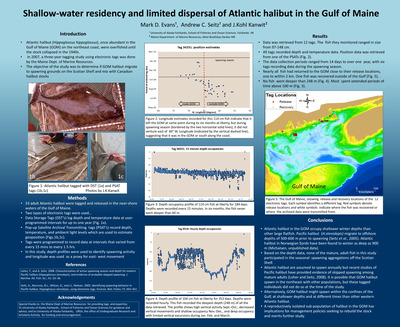
Shallow-water residency and limited dispersal of Atlantic halibut in the Gulf of Maine
Mark D. Evans
• Atlantic halibut (Hippoglossus hippoglossus), once abundant in the Gulf of Maine (GOM) on the northeast coast, were overfished until the stock collapsed in the 1940s. • In 2007, a three-year tagging study using electronic tags was done by the Maine Dept. of Marine Resources. • The objective of the study was to determine if GOM halibut migrate to spawning grounds on the Scotian Shelf and mix with Canadian halibut stocks
-
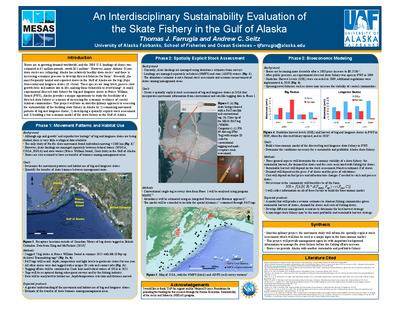
An Interdisciplinary Sustainability Evaluation of the Skate Fishery in the Gulf of Alaska
Thomas Farrugia
Skates are in growing demand worldwide, and the 2008 U.S. landings of skates was estimated at 65 million pounds, worth $11 million. However, many Atlantic Ocean skate stocks are collapsing. Alaska has relatively healthy skate stocks and there is increasing economic pressure to develop directed fisheries for them. Presently, the most frequently landed and exported skates in the Gulf of Alaska are the big (Raja binoculata) and longnose skates (R. rhina). These species are long-lived, possess slow growth rates and mature late in life, making them vulnerable to overfishing. A small experimental directed state fishery for big and longnose skates in Prince William Sound (PWS), Alaska provides a unique opportunity to study the feasibility of a directed skate fishery as a means of increasing the economic resilience of coastal Alaskan communities. This project will take an interdisciplinary approach to assessing the sustainability of the budding skate fishery in Alaska by 1) examining movement patterns of big and longnose skates, 2) developing a spatially-explicit stock assessment and 3) building a bio-economic model of the skate fishery in the Gulf of Alaska.
-
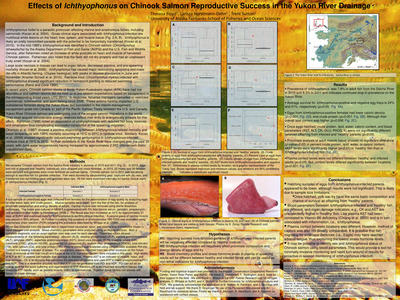
Effects of Ichythyophonus on Chinook Salmon Reproductive Success in the Yukon River Draining
Theresa Floyd
Ichthyophonus hoferi is a parasitic protozoan affecting marine and anadromous fishes, including salmonids (Kocan et al. 2004). Gross clinical signs associated with Ichthyophonus infection are multifocal white lesions on the heart, liver, spleen, and muscle tissue (Fig. 2 A, B). Ichthyophonus is likely an orally transmitted parasite with the potential to be horizontally transferred (Kocan et al. 2010). In the mid 1980’s Ichthyophonus was identified in Chinook salmon (Oncorhynchus tshawytscha) by the Alaska Department of Fish and Game (ADFG) and the U.S. Fish and Wildlife Service, after fishermen noted an increase of white pustules on heart and muscle of harvested Chinook salmon. Fishermen also noted that the flesh did not dry properly and had an unpleasant fruity smell (Kocan et al. 2004). Large scale necrosis in tissues can lead to organ failure, decreased stamina, and pre-spawning mortality (Kocan et al. 2006). Ichthyophonus has caused major reoccurring epizootics and mass die-offs in Atlantic herring, (Clupea harengus), with peaks of disease prevalence in June and November (Kramer-Schadt et al. 2010). Rainbow trout (Oncorhynchus mykiss) infected with Ichthyophonus showed significant reduction in hematocrit pointing to reduced swimming performance (Rand and Cone 1990). In recent years, Chinook salmon stocks of Arctic-Yukon-Kuskokwim region (AYK) have had low abundance and salmon returns did not hold up to pre-season expectations based on escapement in the corresponding brood years (JTC 2011). In response, fisheries managers cancelled or restricted commercial, subsistence, and sport fishing since 2008. These actions harshly impacted U.S. subsistence fisheries along the Yukon River, but succeeded in the interim management escapement goals into Canada as part of the Pacific Salmon Treaty between the U.S. and Canada. Yukon River Chinook salmon are undergoing one of the longest salmon migrations in the world. They must acquire considerable energy reserves before river entry to energetically prepare for this effort. Rahimian (1998) noted an association of ichthyophoniasis with reduced fish body reserves and emaciation thus complicating successful completion of the spawning migration. Okamoto et al. (1987) showed a positive relationship between Ichthyophonus-related mortality and water temperature with 100% mortality occurring at 15°C to 20°C in rainbow trout. Similarly, Kocan et al. (2009) showed significantly reduced swimming performance in Ichthyophonus-infected rainbow trout at 15°C to 20°C. In-river conditions in the Yukon River have changed over the past 30 years, with June water temperatures having increased by approximately 2.5ºC (Horstmann-Dehn unpublished data).
-
Using Multiple Regression Models to Understand the Influence of Geologic History, Topography, Island Size, Isolation and Dispersability on Plant Community Assemblage in the Western Aleutian Islands
Monte Daniel Garroutte
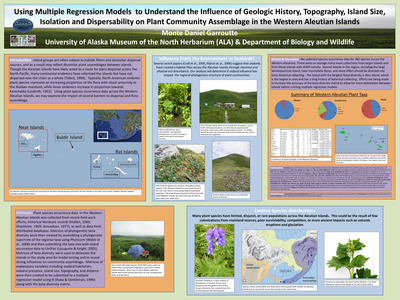
Island groups are often subject to habitat filters and dissimilar dispersal sources, and as a result may reflect dissimilar plant assemblages between islands. Though the Aleutian Islands have likely acted as a route for plant dispersal across the North Pacific, many continental endemics have colonized the islands but have not dispersed over the chain as a whole (Talbot, 1994). Typically, North American endemic plant species represent an increasing proportion of the flora with closer proximity to the Alaskan mainland, while Asian endemics increase in proportion towards Kamchatka (Lindroth, 1961). Using plant species occurrence data across the Western Aleutian Islands, we may examine the impact of several barriers to dispersal and flora assemblage.
-
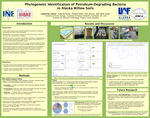
Phylogenetic Identification of Petroleum-Degrading Bacteria in Alaska Willow Soils
Catherine Glover
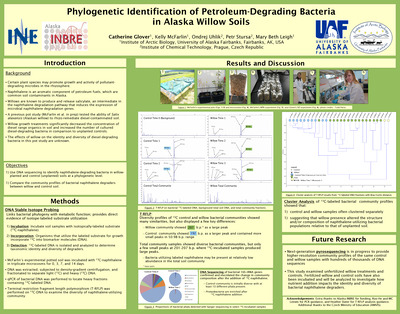
• Certain plant species may promote growth and activity of pollutant- degrading microbes in the rhizosphere. • Naphthalene is an aromatic component of petroleum fuels, which are common soil contaminants in Alaska. • Willows are known to produce and release salicylate, an intermediate in the naphthalene degradation pathway that induces the expression of microbial naphthalene degradation genes. • A previous pot study (McFarlin et al. in prep) tested the ability of Salix alaxensis (Alaskan willow) to rhizo-remediate diesel-contaminated soil. • Willow growth treatments significantly decreased the concentration of diesel range organics in soil and increased the number of cultured diesel-degrading bacteria in comparison to unplanted controls. • The effects of willow on the identity and diversity of diesel-degrading bacteria in this pot study are unknown.
-
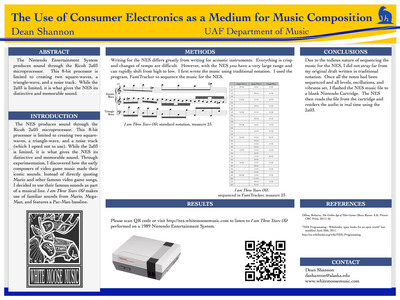
Pilot Study expert, guest artist education experiences for music students at the university level.
Lydia Graf
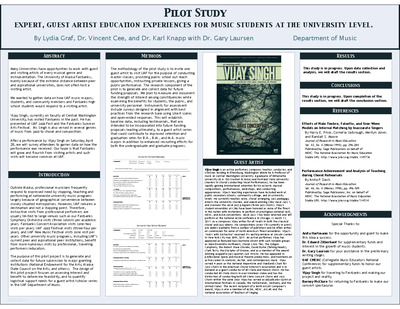
Many Universities have opportunities to work with guest and visiting artists of every musical genre and instrumentation. The University of Alaska Fairbanks, mainly because of the extreme distance between peer and aspirational universities, does not often host a visiting artist. We wanted to gather data on how UAF music majors, students, and community members and Fairbanks high school students would respond to a visiting artist. Vijay Singh, currently on faculty at Central Washington University, has visited Fairbanks in the past. He has presented at UAF Jazz Fest and the Fairbanks Summer Arts Festival. Mr. Singh is also versed in several genres of music from jazz to choral and composition. After a performance by Vijay Singh on Saturday, April 28, we will survey attendees to garner data on how the performance was received. Our hope is that Fairbanks will grow and flourish from visiting artists and such visits will become common at UAF.
-
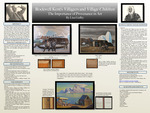
Rockwell Kent’s Villagers and Village Children The Importance of Provenance in Art
Lisa Guffey
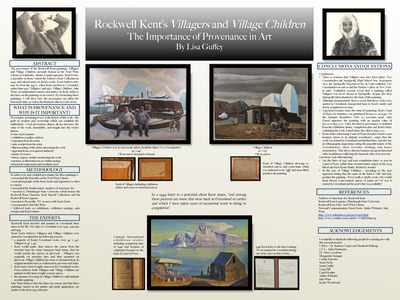
The provenance of the Rockwell Kent paintings, Villagers and Village Children, currently housed at the Noel Wien Library in Fairbanks, Alaska, is under question. Scott Ferris, a specialist on Kent, visited the Library’s Kent Collection in 1993, and relayed notes on Kent’s works. Ferris believes they may be from the 1930’s, when Kent traveled to Greenland, rather than 1947 (Villagers) and 1962 (Village Children). Jake Wien, an independent curator and author on Kent, believes the dates on the paintings to be correct. By researching these paintings, I will show how the provenance can effect the historical value, as well as the financial value in works of art.
-
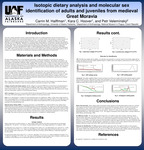
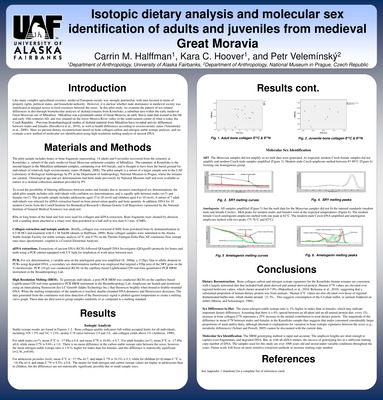
Isotopic dietary analysis and molecular sex identification of adults and juveniles from medieval Great Moravia
Carrin M. Halffman
Like many complex agricultural societies, medieval European society was strongly patriarchal, with men favored in terms of property rights, political status, and household authority. However, it is unclear whether male dominance in medieval society was manifested in unequal access to food resources between the sexes. In this pilot study, we examine the pattern of sex-related differences in diet through biomolecular analyses of skeletal remains from Kostelisko, a suburban area within the early medieval Great Moravian site of Mikulčice. Mikulčice was a prominent center of Great Moravia, an early Slavic state that existed in the 9th and early 10th centuries AD, and was situated on the lower Morava River valley in the south-eastern corner of what is today the Czech Republic . Previous bioarchaeological studies of skeletal material from Mikulčice have revealed activity differences between males and females (Havelková et al., 2010), as well as health differences according to socioeconomic status (Velemínský et al., 2009). Here we present dietary reconstructions based on bone collagen carbon and nitrogen stable isotope analyses, and we evaluate a new method of molecular sex identification using high resolution melting analysis of ancient DNA.
-
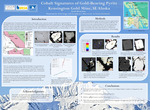
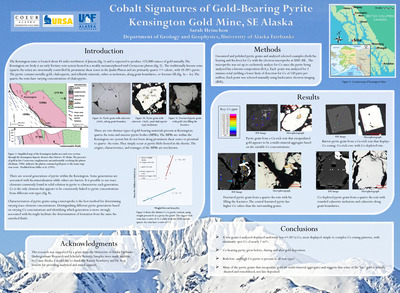
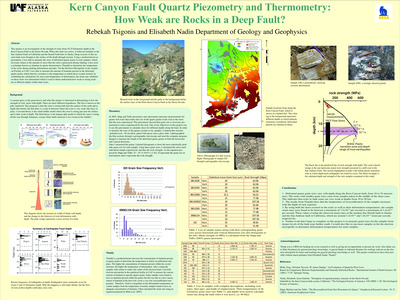
Cobalt Signatures of Gold-Bearing Pyrite Kensington Gold Mine, SE Alaska
Sarah Heinchon
The Kensington mine is located about 45 miles northwest of Juneau and is expected to produce 125,000 ounces of gold annually. The Kensington ore body is an early Tertiary vein system hosted in a weakly metamorphosed mid-Cretaceous pluton. The traditionally known veins (quartz-Au veins) are structurally controlled by prominent shear zones in the Jualin Pluton and are primarily quartz >> calcite, with 10-20% pyrite. The pyrite contains metallic gold, chalcopyrite, and telluride minerals, either as inclusions, along grain boundaries, or fracture fill (fig. 3a – 3c). The quartz-Au veins have varying concentrations of chalcopyrite.
-
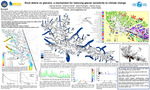
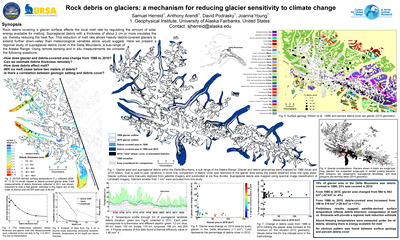
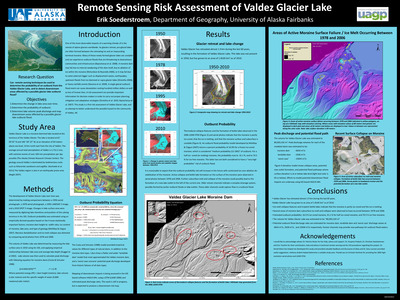
Rock debris on glaciers: a mechanism for reducing glacier sensitivity to climate change
Samuel Herreid
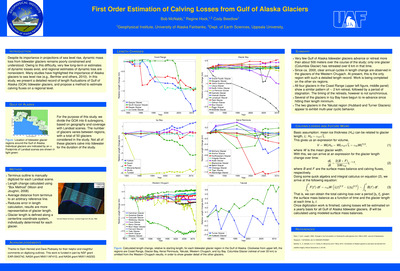
Rock debris covering a glacier surface affects the local melt rate by regulating the amount of solar energy available for melting. Supraglacial debris with a thickness of about 2 cm or more insulates the ice, thereby reducing the heat flux. This reduction of melt rate allows heavily debris-covered glaciers to extend further down-valley than meteorological variables alone would suggest. Here we present a regional study of supraglacial debris cover in the Delta Mountains, a sub-range of the Alaska Range. Using remote sensing and in situ measurements we consider the following questions: -How does glacier and debris-covered area change from 1986 to 2010? -Can we estimate debris thickness remotely? -How does debris affect melt? -Will ice melt cease below two meters of debris? -Is there a correlation between geologic setting and debris cover?
-
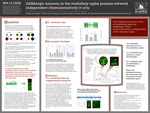
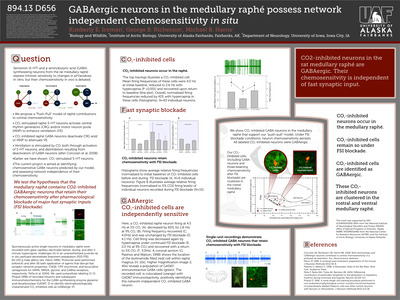
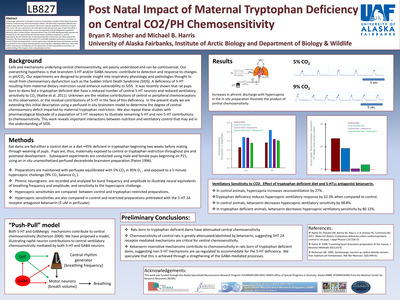
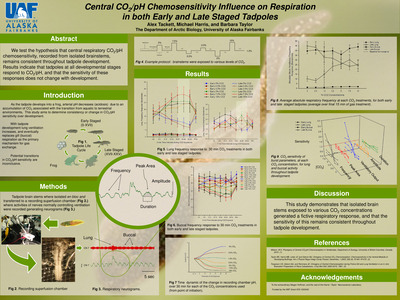
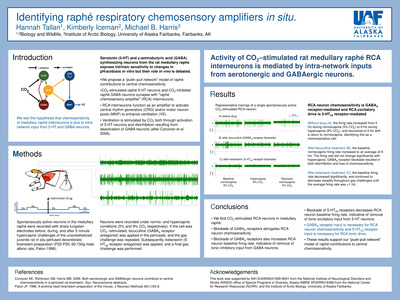
GABAergic neurons in the medullary raphé possess network independent chemosensitivity in situ
Kimberly E. Iceman
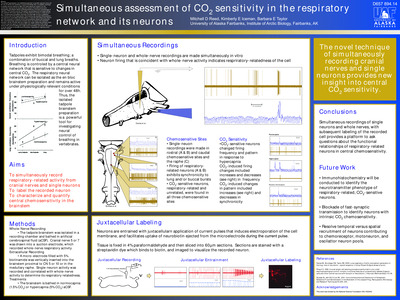
The identity and location of central pH/CO2 sensitive chemoreceptors are not fully understood. Serotonin (5-HT) and γ-aminobutyric acid (GABA) synthesizing neurons in the medullary raphé have demonstrated intrinsic chemosensitivity in vitro. This evidence forms the basis for our "push-pull" model of raphé contributions to chemosensitivity. We have previously shown that CO2-stimulated 5-HT neurons occur in the medullary raphé in situ. Here, we test the hypothesis that the medullary raphé contains GABA synthesizing CO2-inhibited neurons that retain their chemosensitivity after pharmacological blockade of major fast synaptic inputs. To assess chemosensitivity, we record extracellular single neuron discharge during normocapnic and hypercapnic conditions within the medullary raphé of the unanesthetized juvenile rat in situ perfused decerebrate brainstem preparation. Network dependence of chemosensitivity is assessed by application of antagonists for AMPA, NMDA, glycine, and GABAa receptors that disrupt fast-synaptic network properties. Juxtacellular labeling and immunohistochemistry establish neurotransmitter phenotypes of recorded neurons. Results support independence of CO2-inhibited GABA neuron chemosensitivity from fast synaptic inputs.
-
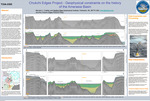
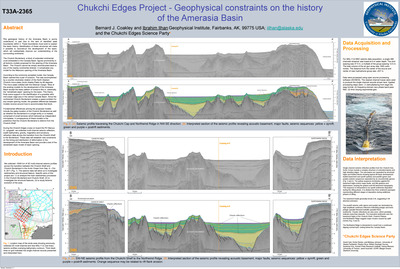
Chukchi Edges Project - Geophysical constraints on the history of the Amerasia Basin
Ibrahim Ilhan
The geological history of the Amerasia Basin is poorly understood, in part due to the lack of identified plate boundaries within it. These boundaries must exist to explain the basin history. Identification of these structures will make it possible to reconstruct the development of the basin, which will substantially improve our understanding of the surrounding continents. The Chukchi Borderland, a block of extended continental crust embedded in the Canada Basin, figures prominently in all tectonic models proposed for the opening of the Amerasia Basin. The Chukchi cannot be simply reconstructed back to any of the nearby continental shelves. It complicates any model for the Mesozoic opening of the Amerasia Basin. According to the commonly accepted model, the Canada Basin opened like a pair of scissors. This was accomplished by a counter-clockwise rotation of the North Alaskan-Chukchi micro-plate (Arctic Alaska Plate) by 66 degrees. The micro-plate collided with the Siberian margin. Most of the existing models for the development of the Amerasia Basin accept the basic pattern of scissors-like or, classically, the “windshield wiper” opening for the basin. This theory finds some support in the identification of a possible relict mid-ocean ridge axis in the central Canada Basin. Since the continental Chukchi Borderland creates a space problem for any simple opening model, the greatest differences between models revolve around how to accommodate that block. Fundamental differences among the proposed models include the paleo-location of the Chukchi Borderland as well as whether the Borderland is a single entity or is instead comprised of small terranes which behaved as independent microplates. A consequence of these models is the prediction that the Chukchi Borderland is distinct from the Chukchi Shelf. During the Chukchi Edges cruise on board the RV Marcus G. Langseth, we collected multi-channel seismic reflection, swath bathymetry, gravity, magnetics and sonobuoy refraction data across the transition from the Chukchi Shelf to the Borderland. These data will establish new constraints on the timing and distribution of deformation in the development of the Amerasia Basin and provide a test of the windshield wiper model of basin opening.
-

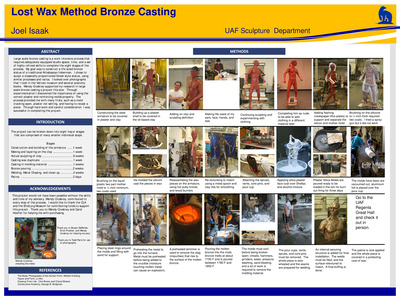
Lost Wax Method Bronze Casting
Joel Isaak
Large scale bronze casting is a work intensive process that requires adequately equipped studio space, time, and a set of highly refined skills to complete the eight stages of the process. My goal was to construct a life sized bronze statue of a traditional Athabascan fisherman. I chose to sculpt a classically proportioned Greek style statue, using similar processes and ratios. I looked over photographs that I took in the Vatican museum and several anatomy books. Wendy Croskrey supported my research in large scale bronze casting a project this size. Through experimentation I discovered the importance of using the correct plaster and reinforcing molds properly. The process provided me with many firsts, such as a mold cracking open, plaster not setting, and having to recast a piece. Through hard work and careful consideration I was successful in completing the project.
-
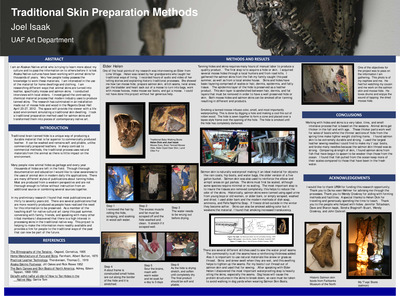
Traditional Skin Preparation Methods
Joel Isaak
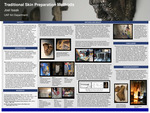
I am an Alaskan Native artist who is trying to learn more about my culture and to pass the information on to others before it is lost. Alaska Native cultures have been working with animal skins for thousands of years. Very few people today possess the knowledge to work these materials. I am interested in the use of the material for home dwellings and clothing. I am researching different ways that animal skins are turned into leather, specifically moose and salmon skins. I conducted interviews with local elders. I investigated the contrasting chemical material process that modern industry uses to produce tanned skins. The research has culminated in an installation made out of moose hide and wood in the Regents Great Hall April 23-27, 2012. The space will provide the viewer with a life sized environment simulating a traditional skin dwelling. I took a traditional preparation method used for salmon skins and transformed them into pieces of contemporary native art.
-
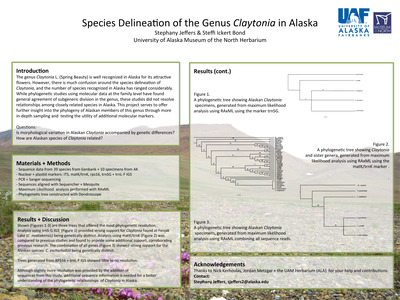
Species Delineation of the Genus Claytonia in Alaska
Stephany Jeffers
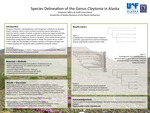
The genus Claytonia L. (Spring Beauty) is well recognized in Alaska for its attractive flowers. However, there is much confusion around the species delineation of Claytonia, and the number of species recognized in Alaska has ranged considerably. While phylogenetic studies using molecular data at the family level have found general agreement of subgeneric division in the genus, these studies did not resolve relationships among closely related species in Alaska. This project serves to offer further insight into the phylogeny of Alaskan members of this genus through more in-‐depth sampling and testing the utility of additional molecular markers. Questions: Is morphological variation in Alaskan Claytonia accompanied by genetic differences? How are Alaskan species of Claytonia related?
Printing is not supported at the primary Gallery Thumbnail page. Please first navigate to a specific Image before printing.