-
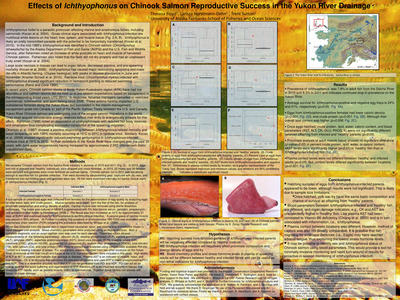
The effect of nutritional stress and life history on the rate of telomere loss in black-legged kittiwake and red-legged kittiwake chicks
Lara Johnson
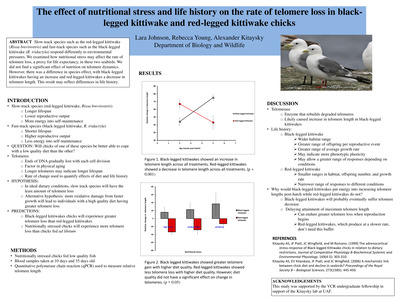
Slow-track species such as the red-legged kittiwake (Rissa brevirostris) and fast-track species such as the black-legged kittiwake (R. tridactyla) respond differently to environmental pressures. We examined how nutritional stress may affect the rate of telomere loss, a proxy for life expectancy, in these two seabirds. We did not find a significant effect of nutrition on telomere dynamics. However, there was a difference in species effect, with black-legged kittiwakes having an increase and red-legged kittiwakes a decrease in telomere length. This result may reflect differences in life history.
-
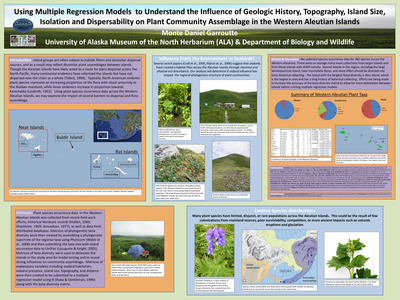
Transient spatiotemporal chaos collapses into periodic and steady states in an electrically-coupled neural ring network
Keegan Keplinger
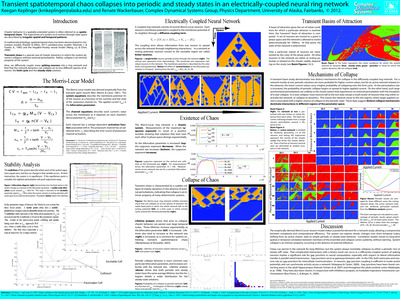
Chaotic behavior in a spatially extended system is often referred to as spatiotemporal chaos. The trajectories of a system as it evolves through state space are described by irregular spatial and temporal patterns. In mathematical biology, spatiotemporal chaos has been demonstrated in chemotaxis models (Painter & Hillen, 2011) predator-prey models (Sherratt, J. & Fowler, A., 1995) and the Hogdkin-Huxley neural model (Wang, Lu, & Chen, 2006). Transient chaos is a special case of chaotic dynamics in which the system dynamics collapses without external perturbation. Rather, collapse is an intrinsic property of the system. Here, we diff usively couple many spiking neurons into a ring network and fi nd that the network dynamics can collapse on to two diff erent species of attractor: the limit cycle and the steady-state solution.
-
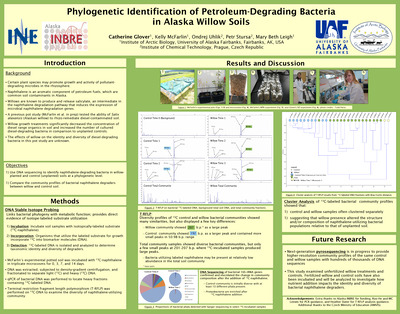
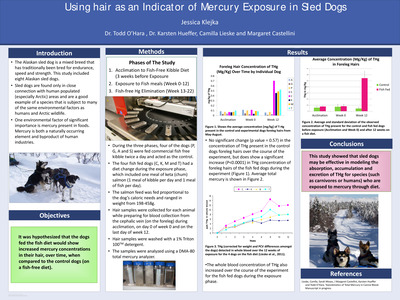
Using hair as an Indicator of Mercury Exposure in Sled Dogs
Jessica Klejka
• The Alaskan sled dog is a mixed breed that has traditionally been bred for endurance, speed and strength. This study included eight Alaskan sled dogs. • Sled dogs are found only in close connection with human populated (especially Arctic) areas and are a good example of a species that is subject to many of the same environmental factors as humans and Arctic wildlife. • One environmental factor of significant importance is mercury present in foods. Mercury is both a naturally occurring element and byproduct of human industries.
-
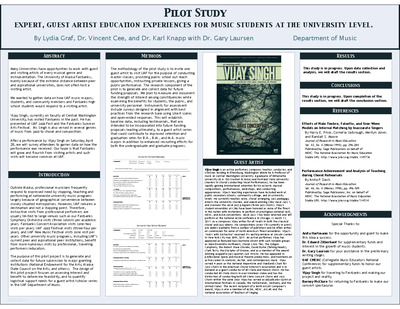
The Study and Expression of Bharatanatyam Classical India Dance
Jessica Lamb
Bharatanatyam is a classical Southern style of Indian dance originating from Tamil Nadu, and is now practiced all over the world. During my stay in India, I learned from Dr. Joshi, Nupur Bharatnattyam Nrityalaya. According to my teacher, this specific dance style is designed to accompany songs that honor and/or describe a God’s story. The dance can vary according to the song and its specific meaning or intent. In my Honors Capstone Project, I composed a fusion choreography using original Bharatnatyam movements performed to Eastern European Slavic Music (artist: Kitka). Every hand, eye, foot, and body movement has a meaning and was incorporated into this choreography. The choreography was then taught to the local dance troupe, Cold Fusion, and performed at Tundra Caravan’s showcase, featuring Suzanne DelVecchio. The performance of this choreography was well received and performed at many other local events. My Capstone Project helped lead the way for more Indian dance to be taught in Fairbanks, AK, as well as further expand my own knowledge.
-

Trapping as a Wildlife Management Tool in Interior Alaska
Xavier Lonewolf
In the present day the Alaska Department of Fish and Game utilizes furbearer trapping as an important Wildlife Management tool. Historically, people have depended on furbearer trapping for required nutrients provided, by meat and also fur for clothing, bedding and shelter. But, modern day advances have impacted the trapping society and resulted in decline of participates. As time persists will the Alaska Dep. of Fish and Game have to replace the benefits that the trapping community provides us? It is important to see what simple solutions could possible restore the downfall. One simple outlook is to understand who all is participating and why. More importantly, are the future generations participating? Because the future holds the key.
-
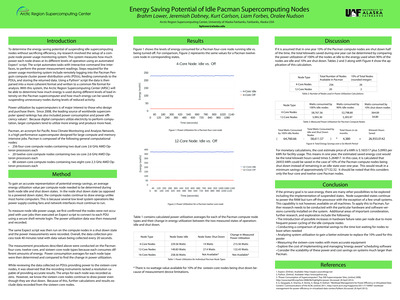
Energy Saving Potential of Idle Pacman Supercomputing Nodes
Brahm Lower
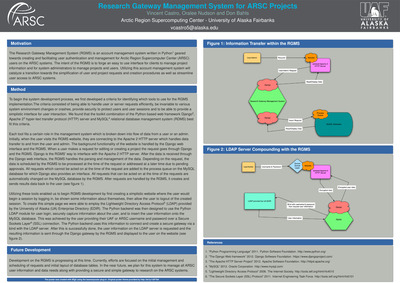
To determine the energy saving potential of suspending idle supercomputing nodes without sacrificing efficiency, my research involved the setup of a compute node power usage monitoring system. This system measures how much power each node draws at its diff erent levels of operation using an automated Expect script. The script automates tasks with interactive command line interfaces, to perform the power measurement readings. Steps required for the power usage monitoring system include remotely logging into the Pacman Penguin compute cluster power distribution units (PDUs), feeding commands to the PDUs, and storing the returned data. Using a Python script the data is then parsed into a more coherent format and written to a common file format for analysis. With this system, the Arctic Region Supercomputing Center (ARSC) will be able to determine how much energy is used during diff erent levels of load intensity on the Pacman supercomputer and how much energy can be saved by suspending unnecessary nodes during levels of reduced activity. Power utilization by supercomputers is of major interest to those who design and purchase them. Since 2008, the leading source of worldwide supercomputer speed rankings has also included power consumption and power efficiency values. Because digital computers utilize electricity to perform computation, larger computers tend to utilize more energy and produce more heat. Pacman, an acronym for Pacific Area Climate Monitoring and Analysis Network, is a high performance supercomputer designed for large compute and memory intensive jobs. Pacman is composed of the following general computational nodes: • 256 four-core compute nodes containing two dual core 2.6 GHz AMD Opteron processors each • 20 twelve-core compute nodes containing two six core 2.6 GHz AMD Opteron processors each • 88 sixteen-core compute nodes containing two eight core 2.3 GHz AMD Opteron processors each
-
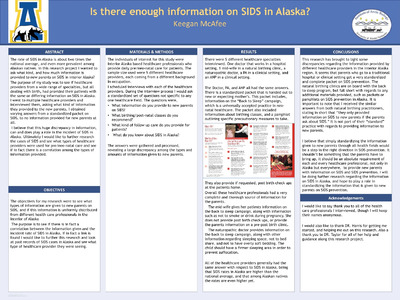
Is there enough information on SIDS in Alaska?
Keegan McAfee
The rate of SIDS in Alaska is about two times the national average, and even more prevalent among Alaska natives. In this research project I wanted to ask what kind, and how much information is provided to new parents on SIDS in interior Alaska? The purpose of my study was to see if healthcare providers from a wide range of specialties, but all dealing with birth, had provided their patients with the same or differing information on SIDS in Alaska. I went to multiple healthcare providers and interviewed them, asking what kind of information they provided to the new parents. I obtained varying answers from a standardized packet on SIDS, to no information provided for new parents at all. I believe that this huge discrepancy in information, can and does play a role in the incident of SIDS in Alaska. Ultimately I would like to further research the cases of SIDS and see what types of healthcare providers were used for pre/neo-natal care and see if in fact there is a correlation among the types of information provided.
-
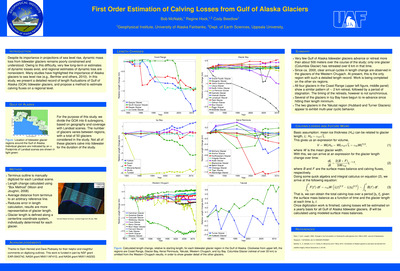
First Order Estimation of Calving Losses from Gulf of Alaska Glaciers
Bob McNabb
Despite its importance in projections of sea level rise, dynamic mass loss from tidewater glaciers remains poorly constrained and understood. Owing to this difficulty, very few long-term or estimates of dynamic losses exist, and regional estimates of dynamic loss are nonexistent. Many studies have highlighted the importance of Alaska glaciers to sea level rise (e.g., Berthier and others, 2010). In this study, we present a detailed record of length fluctuations of Gulf of Alaska (GOA) tidewater glaciers, and propose a method to estimate calving fluxes on a regional level.
-
Using GPS as a reference frame for SAR images applied to a post eruptive period for Okmok Volcano, Aleutian Islands, Alaska
Summer A. Miller
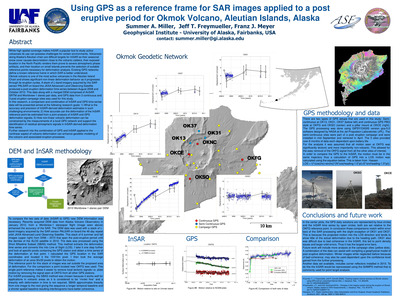
While high spatial coverage makes InSAR a popular tool to study active volcanoes its use can possess challenges for certain environments. Volcanoes along Alaska's Aleutian chain are difficult targets for InSAR as their seasonal snow cover causes decorrelation close to the volcanic caldera, their exposed location in the North Pacific renders them prone to severe atmospheric phase artifacts, and their location on small islands prevents the selection of suitable reference points necessary for deformation analysis. Existing GPS networks define a known reference frame in which SAR is better understood. Okmok volcano is one of the most active volcanoes in the Aleutian Island Chain and shows significant non-linear deformation behavior as it progresses through its eruption cycles. A stack of L-band imagery acquired by the SAR sensor PALSAR on board the JAXA Advanced Land Observing Satellite produced a post eruption deformation time series between August 2008 and October 2010. This data along with a merged DEM comprised of AirSAR SRTM and Worldview-1 stereo pair data, and GPS data from 3 continuous and 3 post eruption campaign sites was used for this study. In this research, a comparison and combination of InSAR and GPS time-series data will be presented aimed at the following research goals: 1) What is the accuracy and precision of InSAR-derived deformation estimates in such challenging environments; 2) How accurate can the deformation of the InSAR reference point be estimated from a joint analysis of InSAR and GPS deformation signals; 3) How non-linear volcanic deformation can be constrained by the measurements of a local GPS network and support the identification of residual atmospheric signals in InSAR-derived deformation time series. Further research into the combination of GPS and InSAR applied to the nonlinear aspect of volcanic deformation can enhance geodetic modeling of the volcano and associated eruption processes.
-

Body Image and Disordered Eating Among UAF Female Athletes and Non-Athletes
Jordyn Montgomery
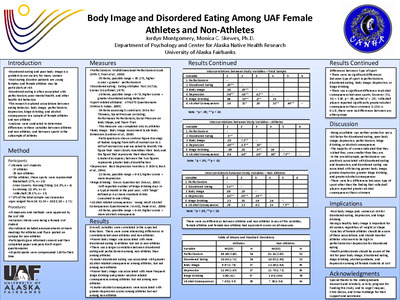
•Disordered eating and poor body image is a problem in our society for many women •Most eating disorder patients are young females, and female athletes may be particularly at risk •Disordered eating is often associated with perfectionism, poor mental health, and other health-risk behaviors •This research explored associations between eating behavior, body image, perfectionism, depression, binge drinking, and alcohol consequences in a sample of female athletes and non-athletes •Analyses were conducted to determine differences in these variables between athletes and non-athletes, and between sports in the subsample of athletes
-
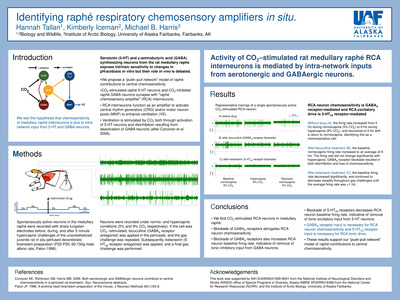
Post Natal Impact of Maternal Tryptophan Deficiency on Central CO2/PH Chemosensitivity
Bryan P. Mosher
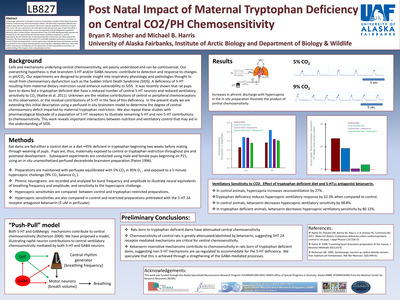
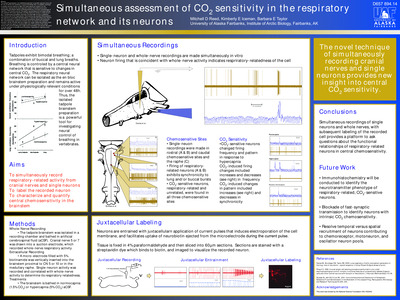
Cells and mechanisms underlying central chemosensitivity, are poorly understood and can be controversial. Our overarching hypothesis is that brainstem 5-HT and/or GABA neurons contribute to detection and response to changes in pH/CO2. Our experiments are designed to provide insight into respiratory physiology, and pathologies thought to result from chemosensory dysfunction such as the Sudden Infant Death Syndrome (SIDS). A deficiency of 5-HT resulting from maternal dietary restriction could enhance vulnerability to SIDS. It was recently shown that rat pups born to dams fed a tryptophan deficient diet have a reduced number of central 5-HT neurons and reduced ventilatory sensitivity to CO2 (Nattie et al. 2011). Unknown are the relative contributions of central vs peripheral chemoreceptors to this observation, or the residual contributions of 5-HT in the face of this deficiency. In the present study we are extending this initial description using a perfused in situ brainstem model to determine the degree of central chemosensory deficit imparted by maternal tryptophan restriction. We also repeat these studies with pharmacological blockade of a population of 5-HT receptors to illustrate remaining 5-HT and non-5-HT contributions to chemosensitivity. This work reveals important interactions between nutrition and ventilatory control that may aid in the understanding of SIDS.
-
Reversibility of Arctic Sea Ice Retreat - A Multi-Scale Modeling Approach
M. Mueller-Stoffels
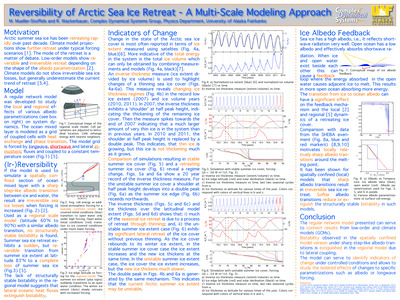
Arctic summer sea ice has been retreating rapidly over past decade. Climate model projections show further retreat under typical forcing scenarios. The mode of the retreat is a matter of debate. Low-order models show reversible and irreversible retreat depending on the shape of the albedo parametrization. Climate models do not show irreversible sea ice losses, but generally underestimate the current trend of retreat.
-
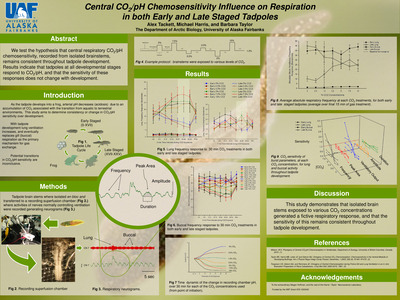
Changes in Respiratory CO2 Chemosensitivity Using Early- and Late-Stage Tadpoles
Andrea K. Nesteby
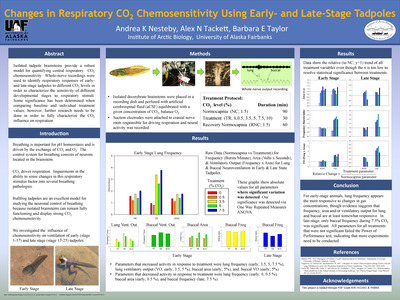
Isolated tadpole brainstems provide a robust model for quantifying central respiratory CO2 chemosensitivity. Whole-nerve recordings were used to identify respiratory responses of early and late-stage tadpoles to different CO2 levels in order to characterize the sensitivity of different developmental stages to respiratory stimuli. Some significance has been determined when comparing baseline and individual treatment values; however, further research needs to be done in order to fully characterize the CO2 influence on respiration.
-
![Growth Response of White Spruce [Picea glauca (Moench) Voss] in Denali National Park under Warming Climate by Kyoko Okano](https://ualaska.researchcommons.org/uaf_ursa_2012_posters/1040/thumbnail.jpg "Growth Response of White Spruce [Picea glauca (Moench) Voss] in Denali National Park under Warming Climate by Kyoko Okano")
Growth Response of White Spruce [Picea glauca (Moench) Voss] in Denali National Park under Warming Climate
Kyoko Okano
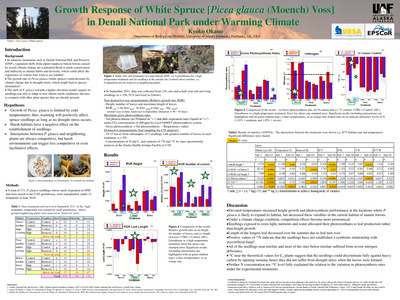
In subarctic mountains such as Denali National Park and Preserve(DNP), vegetation shifts from alpine tundra to boreal forests caused by recent climate change are a potential threat to plant conservation and indirectly to animal habits and diversity, which could affect the experience of visitors who wish to see wildlife. The growth rate of Picea glauca (white spruce) could decrease by climate change due to drought stress, which might lead to species elimination. The shift of P. glauca towards a higher elevation would require its seedlings not only to adapt to new abiotic harsh conditions, but also to compete with other plant species that are already present.
-
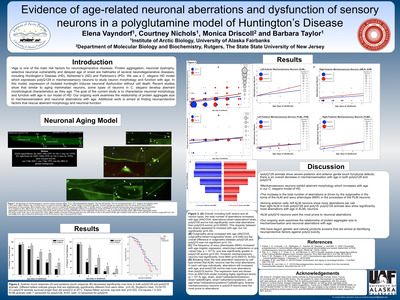
Identifying Morphological and Functional Changes in a Caenorhabditis elegans Neuronal Aging Model of Huntington’s Disease
Cyrena Parker
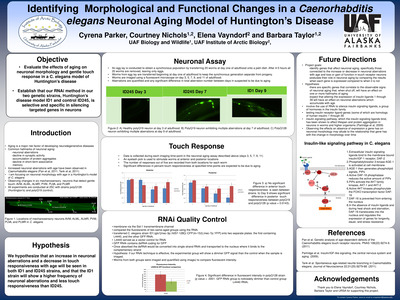
• Evaluate the effects of aging on neuronal morphology and gentle touch response in a C. elegans model of Huntington's disease • Establish that our RNAi method in our two genetic strains, Huntington’s disease model ID1 and control ID245, is selective and specific in silencing targeted genes in neurons
-
Superoxide Dismutase Activity within Caribou Serum as an Indicator of Copper Status
Cassandra Pauling
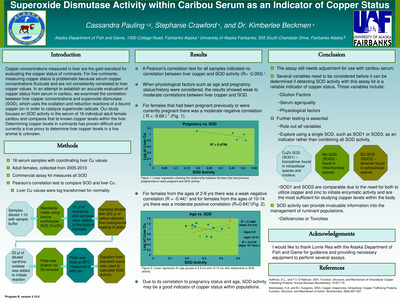
Copper concentrations measured in liver are the gold standard for evaluating the copper status of ruminants. For live ruminants, measuring copper status is problematic because serum copper concentrations fluctuate and are not consistently correlated to liver copper values. In an attempt to establish an accurate evaluation of copper status from serum in caribou, we examined the correlation between liver copper concentrations and superoxide dismutase (SOD), which uses the oxidation and reduction reactions of a bound copper ion in order to catalyze superoxide radicals. Our study focuses on SOD activity in the serum of 16 individual adult female caribou and compares that to known copper levels within the liver. Determining copper levels in ruminants has proven difficult and currently a true proxy to determine liver copper levels in a live animal is unknown.
-
Microsatellite loci among Alaskan rabies hosts: Arctic and red fox
Ben Renshaw
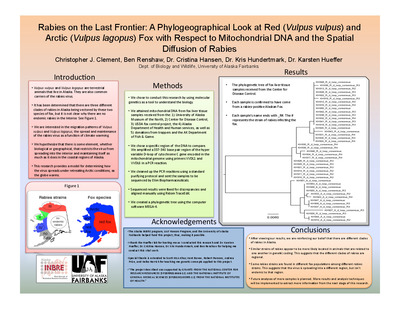
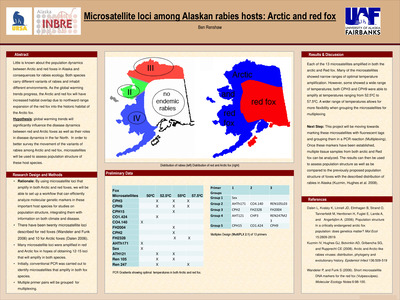
Little is known about the population dynamics between Arctic and red foxes in Alaska and consequences for rabies ecology. Both species carry different variants of rabies and inhabit different environments. As the global warming trends progress, the Arctic and red fox will have increased habitat overlap due to northward range expansion of the red fox into the historic habitat of the Arctic fox. Hypothesis: global warming trends will significantly influence the disease dynamics between red and Arctic foxes as well as their roles in disease dynamics in the far North. In order to better survey the movement of the variants of rabies among Arctic and red fox, microsatellites will be used to assess population structure of these host species.
-
The Origins of Post-eruption Insect Populations on the Aleutian Island of Kasatochi
Sayde Ridling
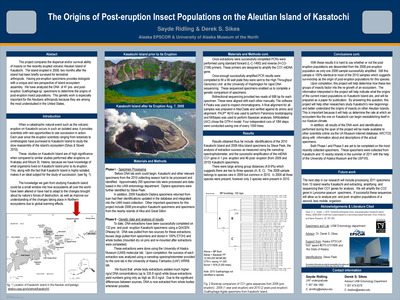
This project compares the dispersal and/or survival ability of insects on the recently erupted volcanic Aleutian Island of Kasatochi. The island erupted in 2008, two months after the island had been briefly surveyed for terrestrial arthropods. Having pre-eruption specimens provides biologists with a unique and rare perspective of island ecosystem assembly. We have analyzed the DNA of 47 pre- and post- eruption Scathophaga sp. specimens to determine the origins of post-eruption insect populations. This genetic work is especially important for the Aleutians arthropods because they are among the most understudied in the United States.
-
Characterization of ibogaine analogs on the hα3β4 nicotinic acetylcholine receptor.
Jordan Ross
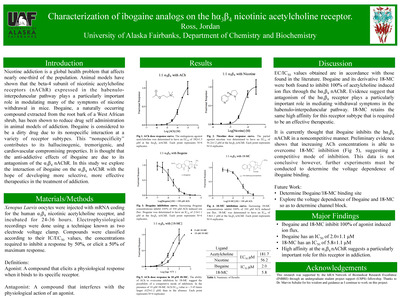
Nicotine addiction is a global health problem that affects nearly one-third of the population. Animal models have shown that the beta-4 subunit of nicotinic acetylcholine receptors (nAChR) expressed in the habenulointerpeduncular pathway plays a particularly important role in modulating many of the symptoms of nicotine withdrawal in mice. Ibogaine, a naturally occurring compound extracted from the root bark of a West African shrub, has been shown to reduce drug self administration in animal models of addiction. Ibogaine is considered to be a dirty drug due to its nonspecific interaction at a variety of receptor subtypes. This “nonspecificity” contributes to its hallucinogenic, tremorigenic, and cardiovascular compromising properties. It is thought that the anti-addictive effects of ibogaine are due to its antagonism of the α3β4 nAChR. In this study we explore the interaction of ibogaine on the α3β4 nAChR with the hope of developing more selective, more effective therapeutics in the treatment of addiction.
-
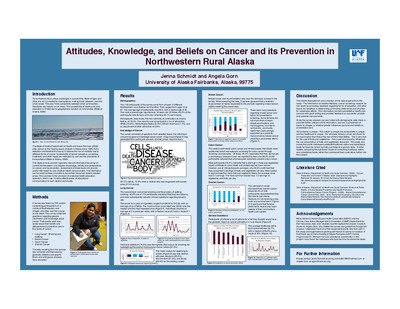
Attitudes, Knowledge, and Beliefs on Cancer and its Prevention in Northwestern Rural Alaska
Jenna Schmidt
Rural Alaskans face unique challenges in accessibility. Most villages and cities are not connected to road systems, limiting travel between rural and urban areas. This also limits connectivity between small communities. Residents rely heavily on air travel. The accessibility of health care and education is limited due to geographical isolation of communities (State of Alaska, 2006). The State of Alaska Department of Health and Social Services (2009) cites cancer as the leading cause of death in Alaska since 1993. Early detection and treatment is key as it reduces the risk of mortality due to different forms of cancer. Accessibility of cancer education, screening, treatment, and other needs are restricted by cost and the availability of transportation (State of Alaska, 2006). This study aims to provide regionally relevant information focusing on current Northwestern rural Alaskan knowledge, beliefs, and perspectives on cancer and its prevention. Assessment of these topics will provide useful information to rural Alaskan health care providers. The information can be used by these providers to focus their resources toward needed areas. This can help in the provision of a tailored health education approach, which may increase effectiveness of educational communication to each distinct community.
-
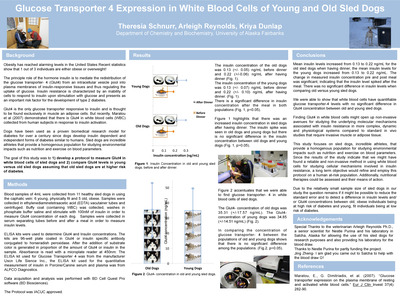
Glucose Transporter 4 Expression in White Blood Cells of Young and Old Sled Dogs
Theresia Schnurr
Obesity has reached alarming levels in the United States Recent statistics show that 1 out of 3 individuals are either obese or overweight! The principle role of the hormone insulin is to mediate the redistribution of the glucose transporter- 4 (Glut4) from an intracellular vesicle pool into plasma membranes of insulin-responsive tissues and thus regulating the uptake of glucose. Insulin resistance is characterized by an inability of cells to respond to insulin upon stimulation with glucose and presents as an important risk factor for the development of type 2 diabetes. Glut4 is the only glucose transporter responsive to insulin and is thought to be found exclusively in muscle an adipose cells. But recently, Maratou et al (2007) demonstrated that there is Glut4 in white blood cells (WBC)collected from human subjects in response to insulin activation. Dogs have been used as a proven biomedical research model for diabetes for over a century since dogs develop insulin dependent and independent forms of diabetes similar to humans. Sled dogs are incredible athletes that provide a homogenous population for studying environmental impacts such as nutrition and exercise on blood parameters. The goal of this study was to 1) develop a protocol to measure Glut4 in white blood cells of sled dogs and 2) compare Glut4 levels in young versus old sled dogs assuming that old sled dogs are at higher risk of diabetes.
Printing is not supported at the primary Gallery Thumbnail page. Please first navigate to a specific Image before printing.