
Files
Download Full Text (1.3 MB)
Description
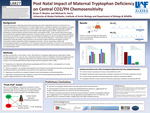
Cells and mechanisms underlying central chemosensitivity, are poorly understood and can be controversial. Our overarching hypothesis is that brainstem 5-HT and/or GABA neurons contribute to detection and response to changes in pH/CO2. Our experiments are designed to provide insight into respiratory physiology, and pathologies thought to result from chemosensory dysfunction such as the Sudden Infant Death Syndrome (SIDS). A deficiency of 5-HT resulting from maternal dietary restriction could enhance vulnerability to SIDS. It was recently shown that rat pups born to dams fed a tryptophan deficient diet have a reduced number of central 5-HT neurons and reduced ventilatory sensitivity to CO2 (Nattie et al. 2011). Unknown are the relative contributions of central vs peripheral chemoreceptors to this observation, or the residual contributions of 5-HT in the face of this deficiency. In the present study we are extending this initial description using a perfused in situ brainstem model to determine the degree of central chemosensory deficit imparted by maternal tryptophan restriction. We also repeat these studies with pharmacological blockade of a population of 5-HT receptors to illustrate remaining 5-HT and non-5-HT contributions to chemosensitivity. This work reveals important interactions between nutrition and ventilatory control that may aid in the understanding of SIDS.
Publication Date
4-17-2012
Keywords
URSA, Research Day
Recommended Citation
Mosher, Bryan P., "Post Natal Impact of Maternal Tryptophan Deficiency on Central CO2/PH Chemosensitivity" (2012). 2012 Research Day Posters. 38.
https://ualaska.researchcommons.org/uaf_ursa_2012_posters/38
Handle
http://hdl.handle.net/11122/1547