-
Future Infrastructure Needs for Automated and Electric Vehicles
Grace Amundsen
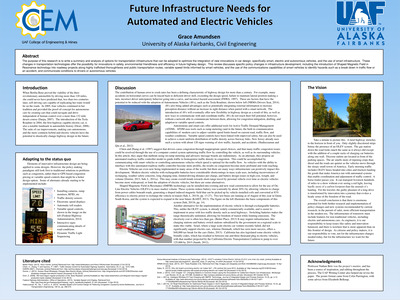
The purpose of this research is to write a summary and analysis of options for transportation infrastructure that can be adopted to optimize the integration of new innovations in car design, specifically smart, electric and autonomous vehicles, and the use of smart infrastructure. These changes in transportation technologies offer the possibility for innovations in safety, environmental friendliness and efficiency in future highway design. This review discusses specific policy changes in infrastructure development, including the introduction of Shaped Magnetic Field in Resonance technology into roadway projects along highly trafficked thoroughfares and public transportation routes, variable speed limits informed by smart vehicles, and the use of the communications capabilities of smart vehicles to identify hazards such as a break down in traffic flow or an accident, and communicate conditions to drivers or autonomous vehicles.
-
The Effects of Grade on Gap Acceptance at the University Roundabout in Fairbanks, Alaska
Grace Amundsen
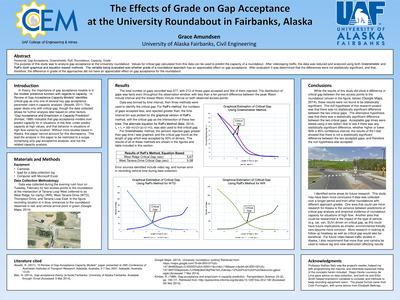
The purpose of this study was to analyze gap acceptance at the University roundabout. Values for critical gap calculated from this data can be used to predict the capacity of a roundabout. After videotaping traffic, the data was reduced and analyzed using both Greenshields’ and Raff’s (both graphical and equation based) methods. The variable being evaluated was whether grade of a roundabout approach has an appreciable effect on gap acceptance. After evaluation it was determined that the differences were not statistically significant, and that, therefore, the difference in grade of the approaches did not have an appreciable effect on gap acceptance for the roundabout.
-
The National Model United Nations Experience
Grace Amundsen, Ana Fochesatto, Mamie Davis, and Matthew Carrick
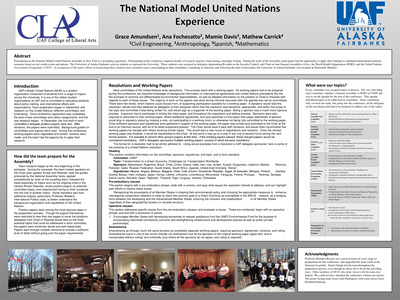
Participating in the National Model United Nations Assembly in New York is a rewarding experience. Participating in this conference required months of research, practice, fund-raising, and paper writing. During the week of the Assembly, participants had the opportunity to apply their findings to simulated international relations scenarios based on real world events and nations. The University of Alaska Fairbanks sent ten students to represent the University. These students were assigned as delegates representing Rwanda on the Security Council, and Chad on four General Assemblies (GAs), the World Health Organization (WHO), and the United Nations Environment Programme (UNEP). In recognition of the team’s efforts in researching their countries and committee topics, participating in their committees, remaining in character, and following the rules of procedure, the University of Alaska Fairbanks was awarded an Honorable Mention.
-
Graphical Technology Information Dissemination
Aaron Andrews
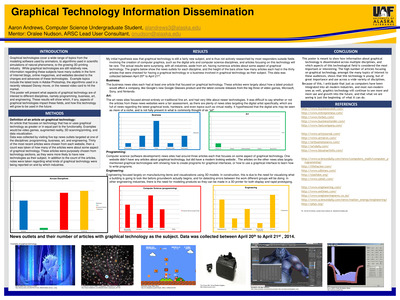
Graphical technologies cover a wide range of topics from the modeling software used by animators, to algorithms used in scientific simulations of natural phenomena, to the growing 3D printing industry. While graphical technologies are still relatively new, information regarding these subjects have many outlets in the form of Internet blogs, online magazines, and websites devoted to the changes and advances of these technologies. Example topics include the latest tools in Adobe Photoshop, the algorithms used in a recently released Disney movie, or the newest video card to hit the market. This poster will present what aspects of graphical technology are of interest to different disciplines, namely programming, business, art, and engineering. These results will show which, if any, aspects of graphical technologies impact these fields, and how this technology will grow to be used in the future.
-
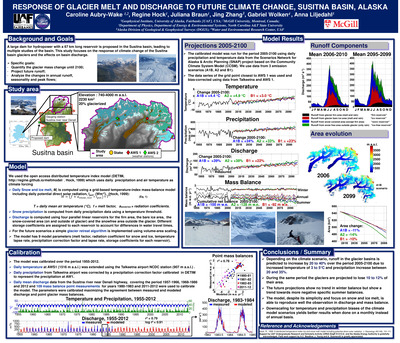
Response of Glacier Melt and Discharge to Future Climate Change, Susitna Basin, Alaska
Caroline Aubry-Wake, Regine Hock, Juliana Braun, Jing Zhang, Gabriel Wolken, and Anna Liljedahl
A large dam for hydropower with a 67 km long reservoir is proposed in the Susitna basin, leading to multiple studies of the basin. This study focuses on the response of climate change of the Susitna basin glaciers and the effects on basin discharge.
-
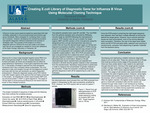
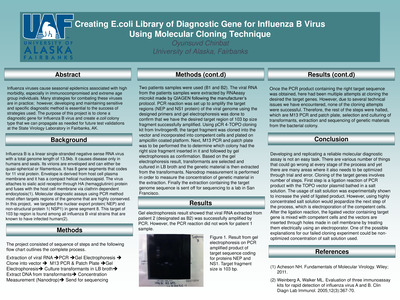
Creating E.coli Library of Diagnostic Gene for Influenza B Virus Using Molecular Cloning Technique
Oyunsuvd Chinbat
Influenza viruses cause seasonal epidemics associated with high morbidity, especially in immunocompromised and extreme age group individuals. Many strategies for combating these viruses are in practice; however, developing and maintaining sensitive and specific diagnostic method is essential to the success of strategies used. The purpose of this project is to clone a diagnostic gene for Influenza B virus and create e.coli colony type that we can propagate as needed for future test validations at the State Virology Laboratory in Fairbanks, AK.
-
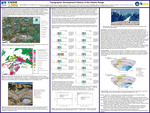
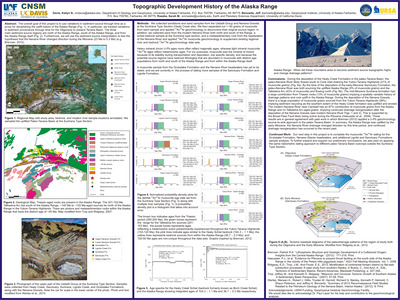
Topographic Development History of the Alaska Range
Kailyn N. Davis
The overall goal of this project is to use variations in sediment source through time as a proxy for deciphering the uplift history of the Alaska Range (Fig. 1). In particular, we tracked variations in sediment provenance through time for the Oligocene to present Tanana Basin. The three main sediment source regions are north of the Alaska Range, south of the Alaska Range, and from the Alaska Range itself (Fig. 2). Furthermore, we will use the sediment source interpretation to test the hypothesis that the Nenana River changed direction during the Miocene (23 Ma to 5.3 Ma) (e.g. Brennan, 2012)
-
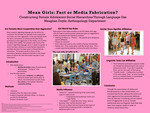
Mean Girls: Fact or Media Fabrication? Constructing Female Adolescent Social Hierarchies Through Language Use
Meaghan Doyle
Most research regarding language use has led to the conclusion that females are typically more cooperative and males are more aggressive. In the past decade there has been a prevalence of adolescent females being portrayed as more aggressive in the media, such as films like Mean Girls (2004). The problem with much of the research regarding language use as it relates to gender is that it has been centered on male-female interactions and little attention has been given to female-female interaction. This project serves to focus on the interactions between adolescent females in the United States as well as the role that media may play in said interactions.
-
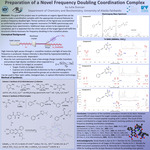
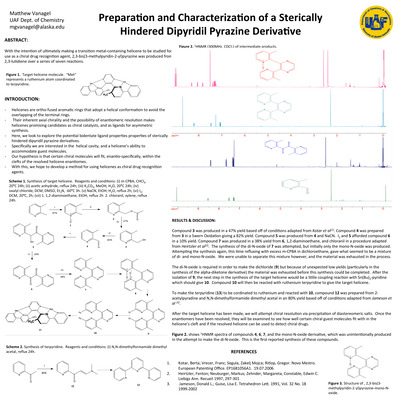
Preparation of a Novel Frequency Doubling Coordination Complex
Julia Duncan
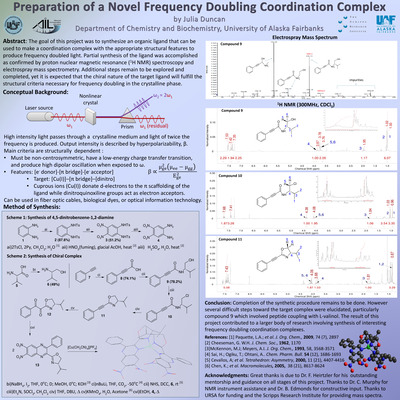
The goal of this project was to synthesize an organic ligand that can be used to make a coordination complex with the appropriate structural features to produce frequency doubled light. Partial synthesis of the ligand was accomplished as confirmed by proton nuclear magnetic resonance ( 1 H NMR) spectroscopy and electrospray mass spectrometry. Additional steps remain to be explored and completed, yet it is expected that the chiral nature of the target ligand will fulfill the structural criteria necessary for frequency doubling in the crystalline phase.
-
Investigating the Challenges and Benefits of Garden-based Learning in Early Child Care Settings
Nicole Dunham and Andrea Bersamin
-
Summer Residency of Pacific Halibut in Glacier Bay National Park
Mark Evans, Andrew C. Seitz, and Julie K. Nielsen
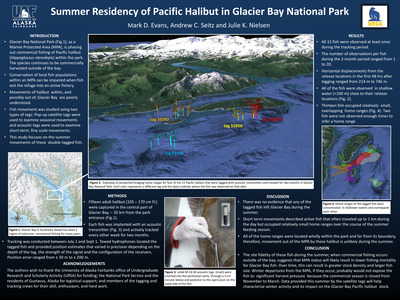
Glacier Bay National Park (Fig.1), as a Marine Protected Area (MPA), is phasing out commercial fishing of Pacific halibut (Hippoglossus stenolepis) within the park. The species continues to be commercially harvested outside of the bay.
-
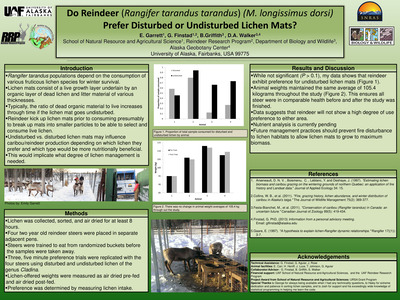
Do Reindeer (Rangifer tarandus tarandus) (M. longissimus dorsi) Prefer Disturbed or Undisturbed Lichen Mats?
Emily Garrett, G. Finstad, B. Griffith, and D. A. Walker
-
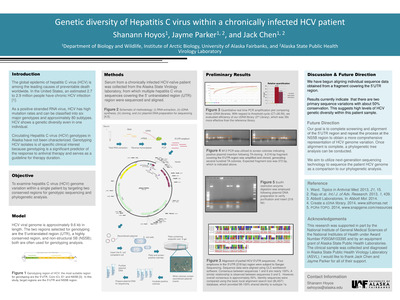
Genetic diversity of Hepatitis C virus within a chronically infected HCV patient
Shanann Hoyos, Jayme Parker, and Jack Chen
-
Relationship between trophic level and total mercury concentrations in 5 Steller sea lion prey species
Gabrielle Johnson, Lorrie Rea, J. Margaret Castellini, Todd Loomis, and Todd O'Hara
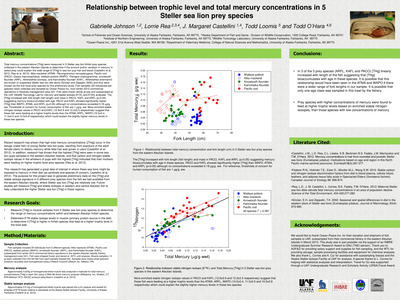
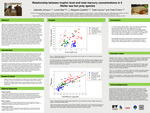
Total mercury concentrations [THg] were measured in 5 Steller sea lion finfish prey species collected in the eastern Aleutian Islands to determine if the amount and/or variation in mercury in select prey could explain the wide range of [THg] in sea lion pup hair and blood (Castellini et al. 2012, Rea et al. 2013). Atka mackerel (ATMA; Pleurogrammus monopterygius), Pacific cod (PACO; Gadus macrocephalus), walleye pollock (WAPO; Theragra chalcogramma), arrowtooth flounder (ARFL; Atheresthes stomias), and Kamchatka flounder (KAFL; Atheresthes evermanni) are known or suspected Steller sea lion diet items (Sinclair and Zeppelin 2002) and thus were chosen as the first focal prey species for this preliminary study. Fish samples (20 individuals per species) were collected and donated by Ocean Peace Inc. from winter 2013 commercial operations in fisheries management area 541. Fish were frozen whole at sea and subsampled at the UAF Wildlife Toxicology Lab for mercury and stable isotope (δ13C and δ15N) analyses. The [THg] increased with fork length (fish length) and mass in PACO, KAFL and ARFL (p<0.05) suggesting mercury bioaccumulates with age. PACO and KAFL showed significantly higher [THg] than WAPO, ATMA, and ARFL (p<0.05) although no concentrations exceeded 0.18 μg/g, ww. Thresholds of concern for human consumption of fish are 1 μg/g, ww. More enriched stable nitrogen isotope values in PACO and KAFL (12.9±0.9 and 12.2±0.3 respectively) suggest that these fish were feeding at a higher trophic levels than the ATMA, ARFL, WAPO (10.5±0.4, 11.5±0.5 and 10.5±0.8 respectively) which could explain the slightly higher mercury levels in these two species.
-
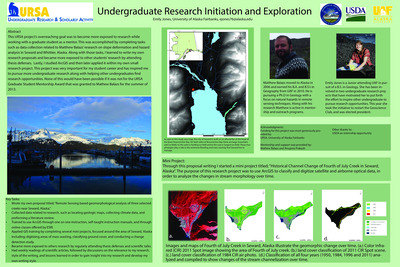
Undergraduate Research Initiation and Exploration
Emily Jones
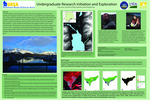
This URSA project’s overreaching goal was to become more exposed to research while working with a graduate student as a mentor. This was accomplished by completing tasks such as data collection related to Matthew Balazs’ research on slope deformation and hazard analysis in Seward and Whittier, Alaska. Along with those tasks, I learned to write my own research proposals and became more exposed to other students’ research by attending thesis defenses. Lastly, I studied ArcGIS and then later applied it within my own small research project. This project was very important for my student career and has inspired me to pursue more undergraduate research along with helping other undergraduates find research opportunities. None of this would have been possible if it was not for the URSA Graduate Student Mentorship Award that was granted to Mathew Balazs for the summer of 2013.
-
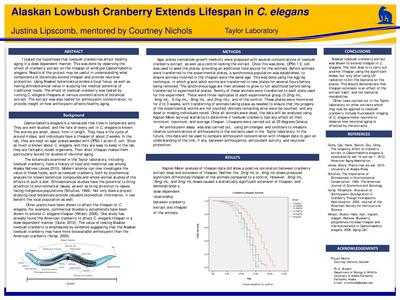
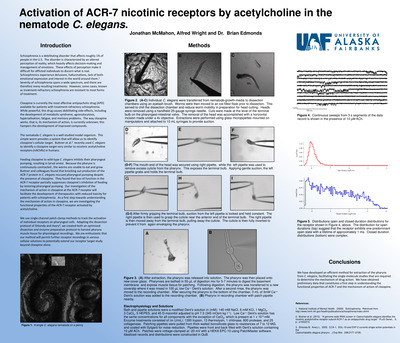
Alaskan Lowbush Cranberry Extends Lifespan in C. elegans
Justina Lipscomb
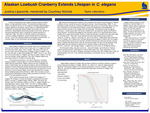
I tested the hypothesis that lowbush cranberries affect healthy aging in a dose dependent manner. This was done by observing the effect of cranberry extract on the lifespan of wildtype Caenorhabditis elegans. Results of the project may be useful in understanding what components of botanicals extend lifespan and provide neuronal protection. Using Alaskan botanicals provides a local focus, as well as having ethnobotanical value in studying the medical potential of traditional foods. The effect of lowbush cranberry was tested by running C. elegans lifespans at various concentrations of botanical extract. The extract was also tested for anthocyanin concentration, to provide insight on how anthocyanin affects healthy aging.
-
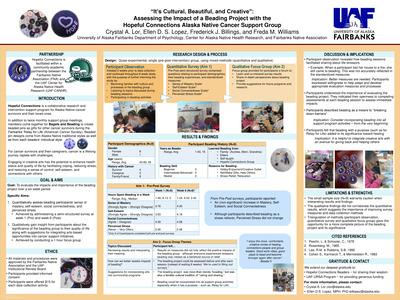
“It’s Cultural, Beautiful, and Creative”: Assessing the Impact of a Beading Project with the Hopeful Connections Alaska Native Cancer Support Group
Crystal A. Lor, Ellen D. Lopez, Frederick J. Billings, and Freda M. Williams
Printing is not supported at the primary Gallery Thumbnail page. Please first navigate to a specific Image before printing.