• Home
  • Search
  • Browse Collections
  • My Account
  • About
  • DC Network Digital Commons Network™
Skip to main content
Scholarworks@UA
  • Home
  • About
  • FAQ
  • My Account
  • UA
  • UAA
  • UAF
  • UAS
  1. Home
  2. >
  3. University of Alaska Fairbanks
  4. >
  5. Undergraduate Research and Scholarly Activity
  6. >
  7. UAF_URSA_2013_POSTERS

2013 Research Day Posters

 
Printing is not supported at the primary Gallery Thumbnail page. Please first navigate to a specific Image before printing.
Follow

Switch View to Grid View Slideshow
 
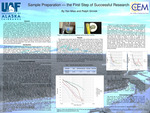
  • Sample Preparation — the First Step of Successful Research by Yan Miao

    Sample Preparation — the First Step of Successful Research

    Yan Miao

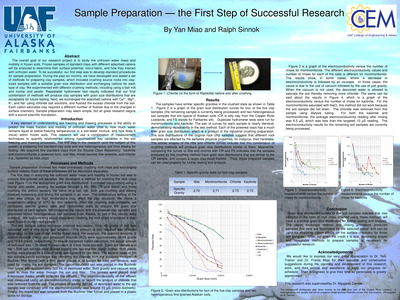
    The overall goal of our research project is to study the unfrozen water mass and mobility in frozen soils. Frozen samples of standard clays with different adsorbed cations will be analyzed to determine their surface potential, micro-fabric, and how they interact with unfrozen water. To be successful, our first step was to develop standard procedures for sample preparation. During the past six months, we have developed and tested a set of methods for preparing clay samples, which included crushing source rocks into clay- sized samples with a suitable grain size distribution and exchanging cations for each type of clay. We experimented with different crushing methods, including using a ball mill, and mortar and pestle. Repeatable hydrometer test results indicated that our final combination of methods will produce clay samples with grain size distributions that are acceptable for future testing. Next, we exchanged the adsorbed cations with Ca2+, Mg2+, K+, and Na+ using chloride salt solutions, and flushed the excess chloride from the soil. Each cation-saturated clay required a different number of flushes due to the changes in surface chemistry. Sample preparation may seem simple, but all great research begins with a sound scientific foundation.

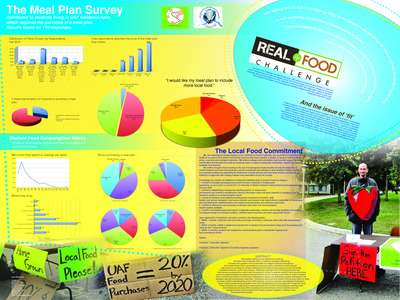
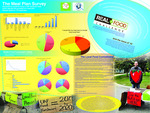
  • The Meal Plan Survey by Azara Mohammadi

    The Meal Plan Survey

    Azara Mohammadi

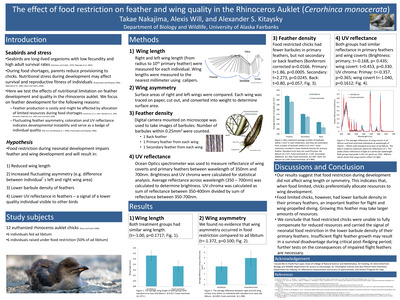
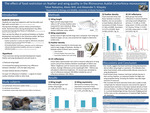
  • The effect of food restriction on feather and wing quality in the Rhinoceros Auklet (Cerorhinca monocerata) by Takae Nakajima

    The effect of food restriction on feather and wing quality in the Rhinoceros Auklet (Cerorhinca monocerata)

    Takae Nakajima

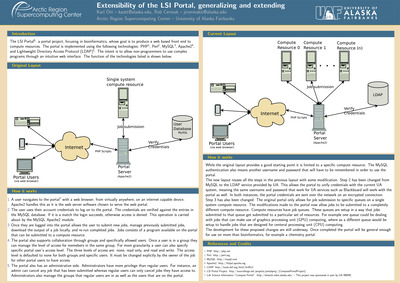
  • Extensibility of the LSI Portal, generalizing and extending by Karl Ott

    Extensibility of the LSI Portal, generalizing and extending

    Karl Ott

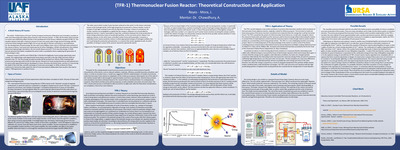
  • (TFR-1) Thermonuclear Fusion Reactor: Theoretical Construction and Application by Joe Reyes-Mora

    (TFR-1) Thermonuclear Fusion Reactor: Theoretical Construction and Application

    Joe Reyes-Mora

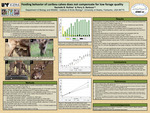
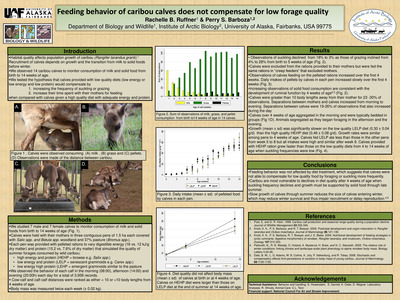
  • Feeding behavior of caribou calves does not compensate for low forage quality by Rachelle Ruffner

    Feeding behavior of caribou calves does not compensate for low forage quality

    Rachelle Ruffner

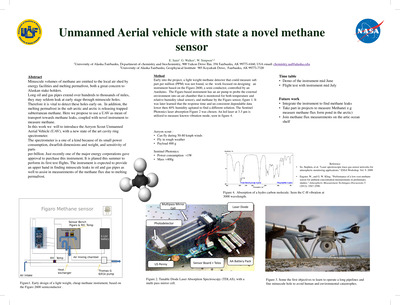
  • Unmanned Aerial vehicle with state a novel methane sensor by Eyal Saiet

    Unmanned Aerial vehicle with state a novel methane sensor

    Eyal Saiet

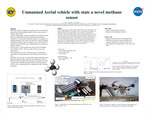
    Minuscule volumes of methane are emitted to the local air shed by energy facilities and melting permafrost, both a great concern to Alaskan stake holders. Long oil and gas pipes extend over hundreds to thousands of miles, they may seldom leak at early stage through minuscule holes. Therefore it is vital to detect these holes early on. In addition, the melting permafrost in the sub arctic and arctic is releasing trapped subterranean methane. Here we propose to use a UAV as mean of transport towards methane leaks, coupled with novel instrument to measure methane. In this work we will to introduce the Aeryon Scout Unmanned Aerial Vehicle (UAV), with a new state of the art cavity ring spectrometer. The spectrometer is a one of a kind because of its small power consumption, dwarfish dimensions and weight, and sensitivity of parts per-billion. Just recently one of the major energy corporations gave approval to purchase this instrument. It is planed this summer to perform its first test flights. The instrument is expected to provide an upper hand in finding minuscule leaks in oil and gas pipes as well to assist in measurements of the methane flux due to melting permafrost.

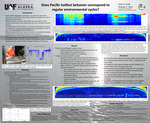
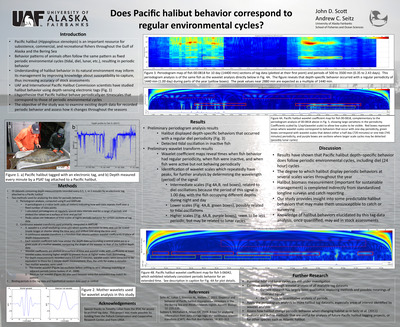
  • Does Pacific halibut behavior correspond to regular environmental cycles? by John Scott

    Does Pacific halibut behavior correspond to regular environmental cycles?

    John Scott

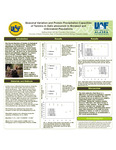
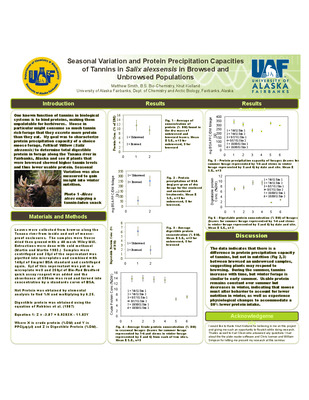
  • Seasonal Variation and Protein Precipitation Capacities of Tannins in Salix alexsensis in Browsed and Unbrowsed Populations by Matthew Smith

    Seasonal Variation and Protein Precipitation Capacities of Tannins in Salix alexsensis in Browsed and Unbrowsed Populations

    Matthew Smith

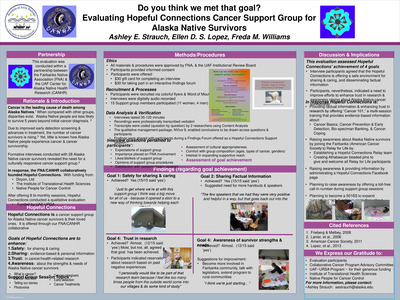
  • Do you think we met that goal? Evaluating Hopeful Connections Cancer Support Group for Alaska Native Survivors by Ashley E. Strauch

    Do you think we met that goal? Evaluating Hopeful Connections Cancer Support Group for Alaska Native Survivors

    Ashley E. Strauch

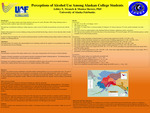
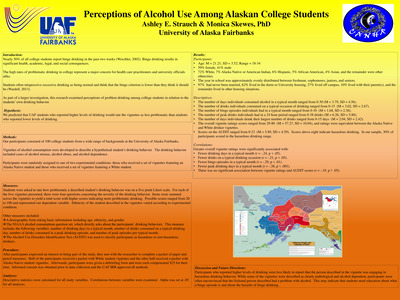
  • Perceptions of Alcohol Use Among Alaskan College Students by Ashley E. Strauch

    Perceptions of Alcohol Use Among Alaskan College Students

    Ashley E. Strauch

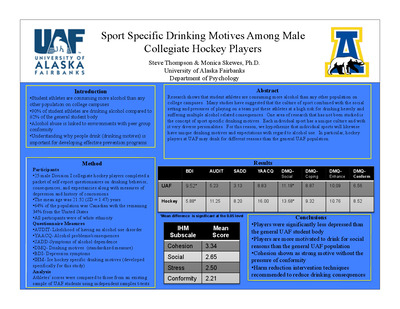
  • Sport Specific Drinking Motives Among Male Collegiate Hockey Players by Steve Thompson

    Sport Specific Drinking Motives Among Male Collegiate Hockey Players

    Steve Thompson

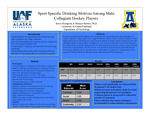
    Research shows that student athletes are consuming more alcohol than any other population on college campuses. Many studies have suggested that the culture of sport combined with the social setting and pressures of playing on a team put these athletes at a high risk for drinking heavily and suffering multiple alcohol related consequences. One area of research that has not been studied is the concept of sport specific drinking motives. Each individual sport has a unique culture and with it very diverse personalities. For this reason, we hypothesize that individual sports will likewise have unique drinking motives and expectations with regard to alcohol use. In particular, hockey players at UAF may drink for different reasons than the general UAF population.

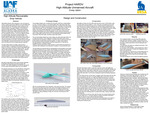
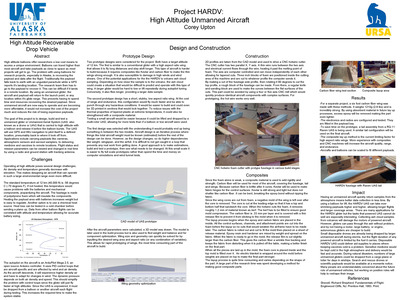
  • Project HARDV: High Altitude Unmanned Aircraft by Corey Upton

    Project HARDV: High Altitude Unmanned Aircraft

    Corey Upton

  • Preparation and Characterization of Sterically Hindered Dipyridil Pyrazine Derivatives  by Matthew Vanagel

    Preparation and Characterization of Sterically Hindered Dipyridil Pyrazine Derivatives 

    Matthew Vanagel

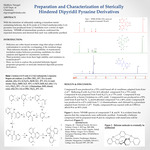
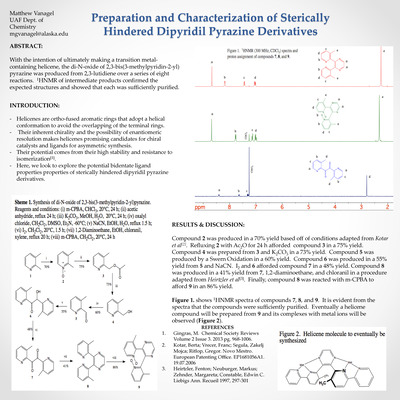
    With the intention of ultimately making a transition metal-­‐‑ containing helicene, the di-­‐‑N-­‐‑oxide of 2,3-­‐‑bis(3-­‐‑methylpyridin-­‐‑2-­‐‑yl) pyrazine was produced from 2,3-­‐‑lutidiene over a series of eight reactions. 1HNMR of intermediate products confirmed the expected structures and showed that each was sufficiently purified.

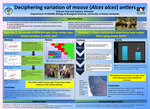
  • Deciphering variation of moose (Alces alces) antlers by Zachary Vehmeier

    Deciphering variation of moose (Alces alces) antlers

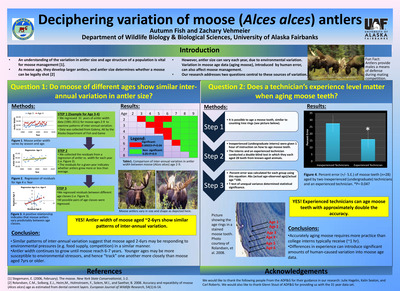
    Zachary Vehmeier

  • Costume Designs for Stephen Karam's "Speech and Debate" by Ariadne Watum

    Costume Designs for Stephen Karam's "Speech and Debate"

    Ariadne Watum

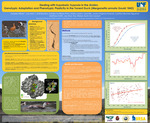
  • Dealing with hypobaric hypoxia in the Andes: Genotypic Adaptation and Phenotypic Plasticity in the Torrent Duck (Merganetta armata Gould 1842) by Daniela Wilner

    Dealing with hypobaric hypoxia in the Andes: Genotypic Adaptation and Phenotypic Plasticity in the Torrent Duck (Merganetta armata Gould 1842)

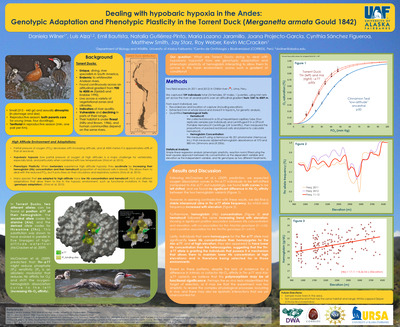
    Daniela Wilner

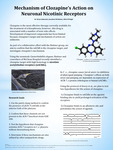
  • Mechanism of Clozapine's Action on Neoronal Nicotinic Receptors by Alfred Wright

    Mechanism of Clozapine's Action on Neoronal Nicotinic Receptors

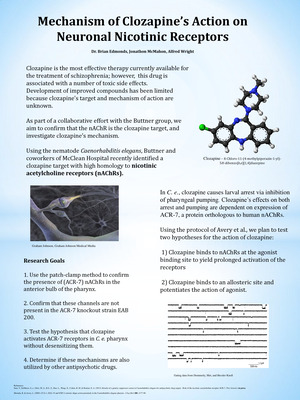
    Alfred Wright

 
  • 1
  • 2


Browse

  • Collections
  • Disciplines
  • Authors

Search

Advanced Search

  • Notify me via email or RSS

Author Corner

  • Author FAQ
 
Elsevier - Digital Commons

Home | About | FAQ | My Account | Accessibility Statement

Privacy Copyright

The University of Alaska is an affirmative action/equal opportunity employer, educational institution and provider and prohibits illegal discrimination against any individual.

Learn more about UA’s notice of nondiscrimination.